Test report DSG-3536 · Rev C · tested October 12, 2026
Processors & AcceleratorsDevice under test
Microsoft Unveils Next-Generation Maia AI Chip to Cut Nvidia Dependence
Microsoft introduced a new generation of its custom Maia AI accelerator, extending its two-vendor silicon strategy to reduce dependence on Nvidia GPUs across Azure's training and inference infrastructure.
- Read
- 3 min
- Words
- 607
- Node
- 3nm
- Operator
- Elena Vasquez
Spec summary
- Microsoft unveiled a new generation of its custom Maia AI chip, with the stated objective of reducing reliance on Nvidia hardware in Azure
- Microsoft first disclosed the Maia 100 chip in November 2023 at its Ignite conference
- The Moomoo report distributed via Google News confirms the announcement but contains no process node, memory, throughput, or pricing details
- Azure already exposes Nvidia H100, H200, and GB200 instances under ND-series SKUs to cloud customers
- Microsoft has indicated Maia-based capacity will serve internal Microsoft products first before external Azure availability
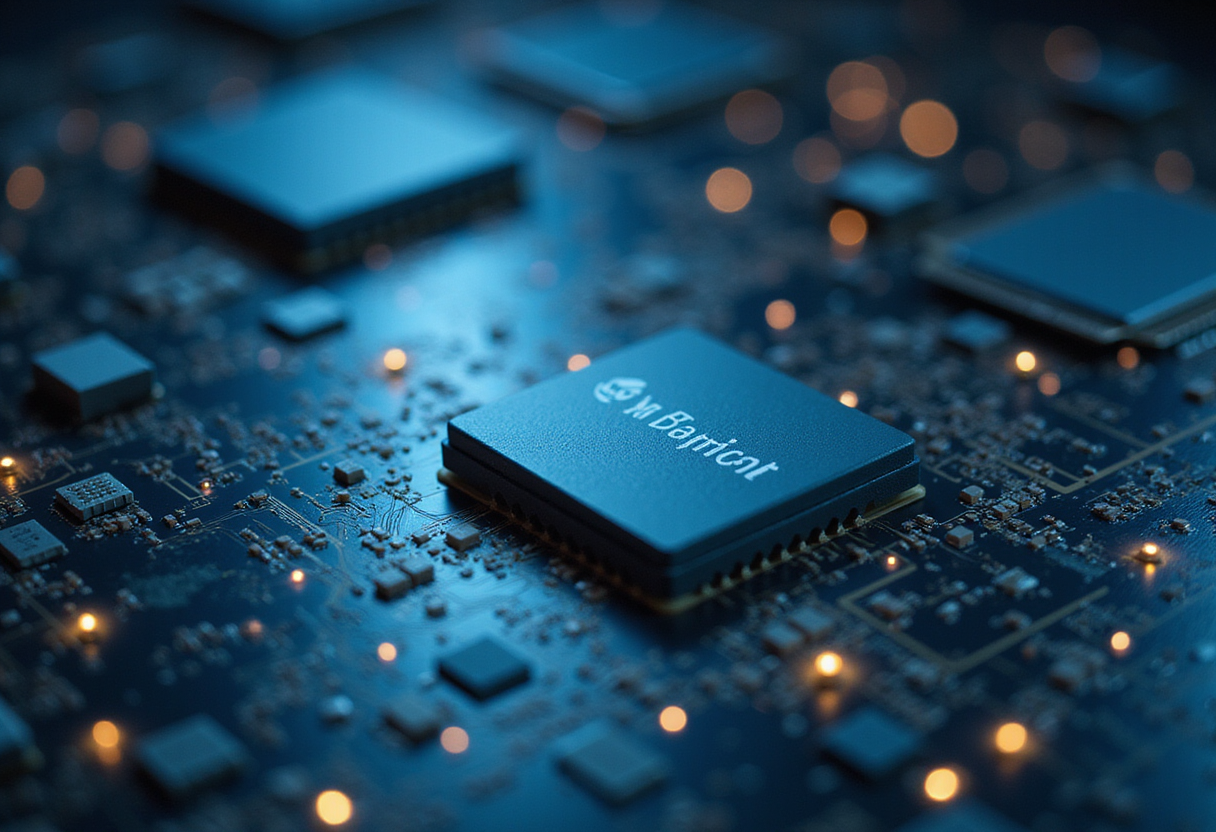
Microsoft unveiled a new generation of its in-house Maia artificial intelligence accelerator, with the stated objective of reducing dependence on Nvidia GPUs across its Azure fleet. The chip forms part of Microsoft's broader effort to operate its AI infrastructure on at least two silicon vendors.
The announcement, distributed via financial newswire Moomoo through a Google News syndication feed, contains no detailed specifications for the new Maia variant. It confirms the chip's role as a structural alternative to Nvidia hardware for training and inference workloads.
Why does Microsoft need a second AI silicon supplier?
Microsoft has scaled Azure over the past three years to host OpenAI services, Microsoft Copilot, and a growing catalog of enterprise AI offerings. The platform's accelerator base has run primarily on Nvidia hardware.
Published capex disclosures from fiscal years 2023 and 2024 show tens of billions of dollars in datacenter buildouts, with GPUs representing the largest single line item. Concentrating hundreds of thousands of accelerators behind one vendor exposes Microsoft to supply allocation, price leverage, and export-control exposure. Taiwan's TSMC manufactures both Nvidia's high-end data center GPUs and competing custom AI silicon programs, leaving shared geopolitical risk regardless of which vendor supplies the chip.
What is the Maia chip program?
Microsoft disclosed the first-generation Maia 100 in November 2023 at its Ignite conference. The company designed that chip for inference at hyperscale, targeting transformer-class models. Internal deployments reportedly include GitHub Copilot and portions of Bing's ranking and generative systems.
The Maia line pairs with Microsoft's ONNX Runtime and DirectML. Models built on the ONNX format and compiled for Nvidia CUDA can retarget Maia hardware without kernel rewrites. This software bridge matters operationally: workloads can shift between accelerators based on capacity, cost, or availability without retraining the underlying model.
How does Microsoft compare to other hyperscalers with custom AI silicon?
Google has operated Tensor Processing Units in production since 2018, with multiple generations now serving both internal workloads and Google Cloud customers. AWS sells Trainium for training and Inferentia for inference through its Bedrock and SageMaker services. Meta runs MTIA chips for recommendation systems inside Facebook and Instagram.
Microsoft's Maia program follows the same structural pattern: supplement, do not replace, Nvidia procurement. Hyperscaler custom silicon programs have so far addressed specific workload segments rather than displacing general-purpose GPU fleets.
What did the Moomoo report actually disclose?
The headline confirms the new chip and the strategic intent. It does not include:
- Die size, transistor count, or process node
- Memory type, capacity, or bandwidth
- Throughput benchmarks (TOPS, tokens per second)
- Power envelope
- Per-unit or volume pricing
- Production timeline
- Foundry partner
Customers evaluating Azure AI capacity therefore have no new specification sheet to reference as of this report.
What changes for Azure customers?
Microsoft has indicated Maia-based capacity will serve internal Microsoft products first, with external availability following. Azure already exposes H100, H200, and GB200 instances to customers; published SKUs include ND H100 v5 and ND H200 v5 series. Pricing for Maia-based instances has not been disclosed. Customers consuming OpenAI service endpoints through Azure do not directly select the underlying accelerator.
What to watch next
- Microsoft's Q1 and Q2 fiscal 2026 capex disclosures, which will include any Maia-related spend
- Job postings and supplier filings indicating the foundry partner for the new generation
- Azure region announcements specifying Maia-equipped instance families
- Benchmark disclosures once the chip reaches external workloads
- Statements on Nvidia procurement volumes in upcoming earnings calls
Microsoft intends to operate a cloud AI fleet that draws from at least two silicon vendors. The Maia announcement advances that structure.
via Google News: AI chip (Source)
More from Elena Vasquez
Show full bio
Senior reporter covering people, launches and day-to-day practice in hardware layer of artificial intelligence at Die Signal.
284 articles
Same lot · LOT-C1C8
- DSG-26215nmMicrosoft Unveils New AI Chip in 'Biggest Bet Yet' on Own Silicon
- DSG-61057nmMicrosoft Targets Nvidia Reliance Cuts With Maia 300 AI Chip
- DSG-91905nmMicrosoft's New AI Chip Reduces Dependence on Nvidia GPUs
- DSG-187665nmMicrosoft Unveils Maia 300 to Cut AI Chip Dependence on Nvidia and AMD
- DSG-90885nmMicrosoft's Maia 300 Claims 40% Efficiency Gain Over Nvidia