Test report DSG-1876 · Rev E · tested October 12, 2026
Processors & AcceleratorsDevice under test
Microsoft Unveils Maia 300 to Cut AI Chip Dependence on Nvidia and AMD
Microsoft has unveiled the Maia 300, a custom in-house AI chip designed to reduce the company's reliance on Nvidia and AMD for AI compute capacity.
- Read
- 2 min
- Words
- 354
- Node
- 65nm
- Operator
- Priya Raman
Spec summary
- Microsoft has unveiled the Maia 300, a custom in-house AI chip.
- The chip is aimed at reducing Microsoft's dependence on Nvidia and AMD accelerators.
- Microsoft joins hyperscalers like Google in designing its own AI silicon.
- No performance figures, pricing, or deployment timeline accompanied the unveiling.
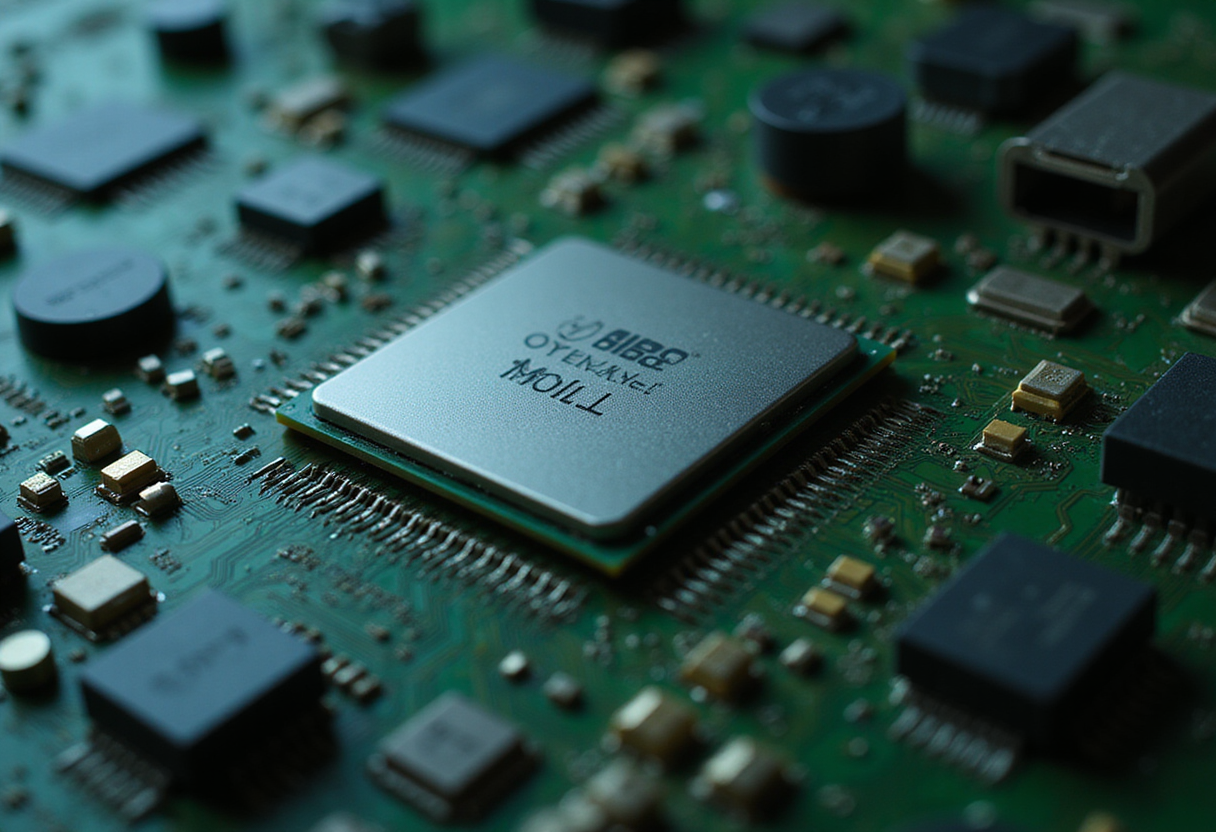
Microsoft has unveiled the Maia 300, a custom AI chip the company positions as a way to reduce its dependence on Nvidia and AMD for AI compute hardware.
The announcement places Microsoft among the large cloud and software vendors building first-party silicon rather than relying exclusively on merchant GPU suppliers. Nvidia currently dominates the accelerators used to train and run large AI models, with AMD as the second major supplier.
What does the Maia 300 change?
The core of the announcement is sourcing. By developing the Maia 300 in-house, Microsoft gains a silicon option it controls directly, rather than purchasing all of its AI accelerator capacity from Nvidia or AMD.
For buyers of AI infrastructure, the significance is straightforward:
- A third supplier category — hyperscaler-built chips — enters the AI compute market alongside merchant GPUs.
- Microsoft can align chip design with its own datacenter workloads instead of adapting to external product cycles.
- Reduced single-vendor dependence may affect Microsoft's cost structure for AI training and inference at scale.
Who is affected?
The move matters most to three groups: Nvidia and AMD, whose share of Microsoft's accelerator purchases could decline over time; Microsoft's cloud customers, who may see the effects through AI service pricing and capacity; and competitors such as Google, which already designs its own AI chips.
The unveiling itself does not set a deployment timeline, pricing, or performance figures. Those details — benchmark results, availability dates, and the scale of Maia 300 deployment in Microsoft datacenters — will determine how much demand actually shifts away from merchant GPUs.
Why it matters now
Demand for AI accelerators has outpaced supply across the industry, and buyers capable of designing their own silicon have moved to secure alternative capacity. Microsoft's Maia program sits in that context: the Maia 300 unveiling signals continued investment in that direction rather than a one-off prototype.
The competitive question ahead is whether Microsoft's in-house chips reach the performance and production volume needed to displace meaningful orders from Nvidia and AMD — or whether they serve as a supplement and negotiating lever in an Nvidia-dominated market.
via Google News: AI chip (Source)
More from Priya Raman
Show full bio
Correspondent covering money, funding and market shifts around hardware layer of artificial intelligence at Die Signal.
269 articles
Same lot · LOT-C1C8
- DSG-61057nmMicrosoft Targets Nvidia Reliance Cuts With Maia 300 AI Chip
- DSG-423965nmMicrosoft unveils Maia 300 AI chip, targets Nvidia dependency
- DSG-55767nmMicrosoft Targets 2027 Launch for Maia 300 AI Chip
- DSG-28127nmMicrosoft Positions Maia 300 as Its Inference-Workload Chip
- DSG-39283nmMicrosoft's Maia 300: A Power Play, Not an Nvidia Killer