Test report DSG-4376 · Rev C · tested October 12, 2026
Processors & AcceleratorsDevice under test
Microsoft unveils Maia 300 as its most powerful AI chip to date
Microsoft has unveiled the Maia 300, calling it its most powerful AI chip to date. The custom accelerator targets inference traffic for Copilot, Microsoft Teams and the newer Cowork agent surface.
- Read
- 3 min
- Words
- 605
- Node
- 5nm
- Operator
- Elena Vasquez
Spec summary
- Microsoft describes Maia 300 as its most powerful AI chip to date.
- Microsoft's first custom AI accelerator, Maia 100, was announced at Ignite in late 2023.
- Maia 300 is positioned for inference workloads on Copilot, Microsoft Teams and Cowork.
- Microsoft has not disclosed process node, memory configuration or peak throughput for Maia 300.
- Initial Maia 300 deployment is expected inside Microsoft's own data centers rather than as an Azure SKU.
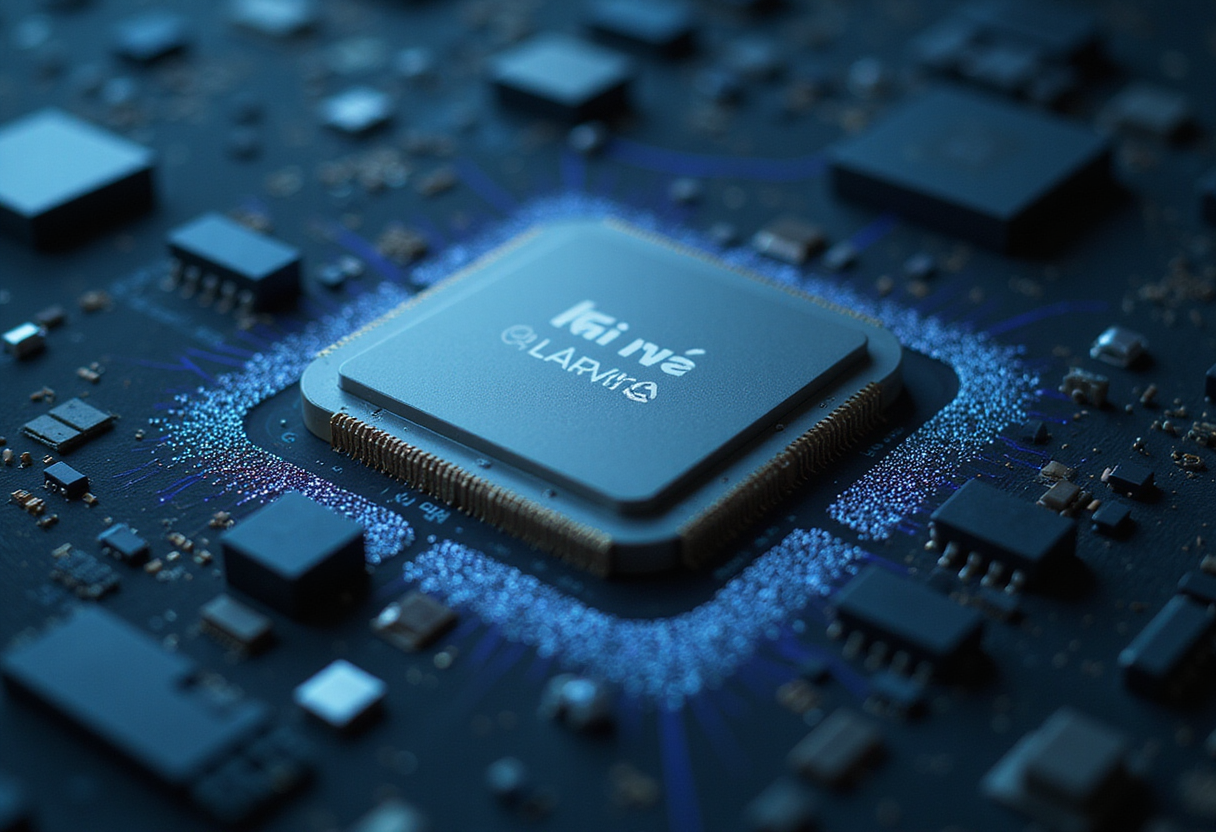
Microsoft has unveiled the Maia 300, describing the custom accelerator as its most powerful AI chip to date and tying it directly to three flagship surfaces: Copilot, Microsoft Teams and the newer Cowork agent product. TechRadar's reporting frames the launch as the moment Microsoft aims to make those products "much better at last."
The headline cuts to the core issue: Microsoft's consumer and enterprise AI products have drawn complaints about latency, hallucination rates and cost per query at hyperscale. Maia 300 is the company's response—putting more inference traffic onto in-house silicon rather than off-the-shelf GPUs.
Why custom silicon, and why now?
Microsoft operates one of the largest Copilot installations in production, with Teams AI features and the newer Cowork surface adding to query volume every quarter. Running those workloads on merchant GPUs has produced the cost structure Microsoft has spent two years publicly trying to bend. Custom silicon is the lever most directly under Microsoft's control: higher utilization, lower per-query cost, and tighter coupling with the model stack Microsoft runs.
How does Maia 300 fit Microsoft's prior parts?
Microsoft's first publicly disclosed custom AI accelerator, Maia 100, was announced at Ignite in late 2023 and entered service inside Microsoft data centers the following year. Available reporting does not detail the generational jump from Maia 100 to Maia 300 across process node, memory bandwidth, peak TOPS or rack-level integration. The "most powerful yet" framing is Microsoft-supplied and cannot yet be benchmarked against published specifications.
Where will Maia 300 run?
Initial deployment is expected inside Microsoft's own data centers, mirroring the Maia 100 rollout. There is no indication that Maia 300 will be exposed as a discrete SKU for Azure customers in the near term, consistent with how Microsoft has historically managed custom-silicon capacity. Custom parts have, so far, served internal Microsoft traffic before any external rollout is even disclosed.
Which workloads will it accelerate?
The chip is positioned for inference rather than training. Inference workloads include Copilot's interactive responses, Teams meeting summarization and transcription features, retrieval-augmented generation in enterprise tenants and the agent orchestration behind the Cowork product surface. Training of frontier models continues on Microsoft's existing GPU fleet.
What hasn't Microsoft disclosed?
Process node, foundry partner, memory configuration, peak throughput, per-rack integration, total silicon volume ordered and the date of first production traffic all remain unconfirmed in the reporting currently available. Microsoft typically publishes deeper custom-silicon and rack-architecture detail at its annual Ignite conference in November, where announcements about Maia 300 capacity, partner programs and software-stack integration are widely anticipated.
Industry context
Microsoft joins a small group of hyperscalers running material AI traffic on proprietary accelerators. Google has shipped TPU generations since 2016, Amazon has deployed Trainium and Inferentia across AWS regions, and Meta has pushed its MTIA line into production inference workloads. Nvidia retains the dominant share of the broader accelerator market, but inference economics are the contested ground where Microsoft's Maia 300 now competes. The hyperscaler race is no longer about access to GPUs; it is about who can amortize silicon fastest across its own traffic.
If Maia 300 delivers against the framing Microsoft has set, end users should see faster Copilot responses, shorter wait times on Teams AI features and more reliable agent behavior inside Cowork. Whether the chip delivers on those promises depends on specs Microsoft has not yet shared—and on whether Microsoft's model and system-software teams can squeeze the silicon for the latency and cost metrics that the launch is being sold on.
via Google News: AI chip (Source)
More from Elena Vasquez
Show full bio
Senior reporter covering people, launches and day-to-day practice in hardware layer of artificial intelligence at Die Signal.
284 articles
Same lot · LOT-C1C8
- DSG-31655nmMicrosoft Unveils Maia 300 AI Chip for Copilot and Teams
- DSG-55767nmMicrosoft Targets 2027 Launch for Maia 300 AI Chip
- DSG-187665nmMicrosoft Unveils Maia 300 to Cut AI Chip Dependence on Nvidia and AMD
- DSG-28127nmMicrosoft Positions Maia 300 as Its Inference-Workload Chip
- DSG-90885nmMicrosoft's Maia 300 Claims 40% Efficiency Gain Over Nvidia