Test report DSG-7103 · Rev F · tested October 15, 2026
Processors & AcceleratorsDevice under test
Microsoft Unveils Maia 300 AI Chip, Targeting Nvidia on Cost
Microsoft has unveiled the Maia 300, its newest in-house AI accelerator, taking aim at Nvidia's pricing in the AI compute market. The move targets cost relief for Azure.
- Read
- 2 min
- Words
- 467
- Node
- 45nm
- Operator
- Elena Vasquez
Spec summary
- Microsoft (NASDAQ: MSFT) unveiled the Maia 300, its latest in-house AI accelerator chip
- The chip is positioned as a direct cost challenge to Nvidia (NASDAQ: NVDA) in AI compute
- Maia 300 continues Microsoft's strategy of designing first-party silicon for its data centers
- The move follows similar in-house chip efforts by Google and Amazon
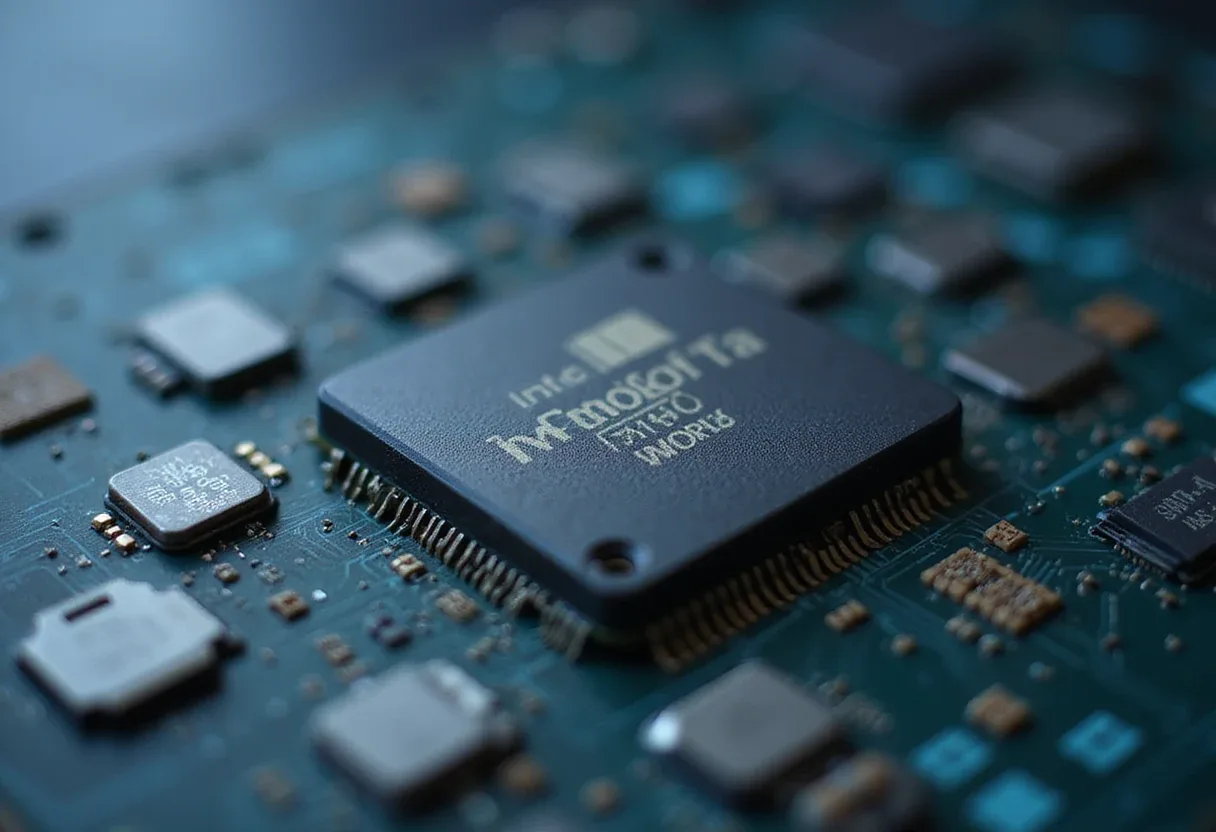
Microsoft (NASDAQ: MSFT) has pulled back the curtain on the Maia 300, its newest in-house AI accelerator, in a direct challenge to Nvidia (NASDAQ: NVDA) on cost. The announcement signals Redmond's continued push to reduce its dependence on outside silicon suppliers for the AI workloads driving its cloud business.
For practitioners, the meaning is straightforward: Microsoft wants a cheaper alternative to Nvidia's dominant GPUs inside its own data centers. The Maia 300 is the latest iteration of a chip line the company has been building to run AI training and inference on its own terms.
What does the Maia 300 change?
The core pitch is cost. Nvidia's GPUs currently command the lion's share of the AI accelerator market, and buyers have complained for over a year about price and supply constraints. Microsoft designing and deploying its own silicon gives it leverage — the option to shift workloads off Nvidia hardware when the economics favor it.
That matters for two groups in particular:
- Azure customers, who could see cost improvements passed through as Microsoft's per-unit compute costs drop.
- Nvidia investors, who now face a credible first-party alternative from one of their largest cloud customers.
Microsoft isn't alone in this strategy. Google builds its TPU line, and Amazon has its Trainium and Inferentia chips. Maia puts Microsoft firmly in the same camp of hyperscalers hedging against Nvidia's pricing power.
Why cost, not just performance?
The framing of the announcement — challenging Nvidia on cost rather than raw capability — tells you where Microsoft sees the opening. Matching Nvidia's performance across every workload is a tall order. Undercutting it on price for specific, well-understood workloads inside Azure is a more achievable target.
For engineers running models on Azure, that could mean cheaper inference over time as Microsoft tunes Maia for its own software stack. It also tightens the integration between Microsoft's models, its cloud platform, and now its silicon — a full-stack play that Nvidia can't fully replicate from the outside.
What's the market impact?
Nvidia remains the industry's AI compute supplier of record, and one chip announcement won't change that overnight. But the competitive logic is cumulative. Every workload Microsoft moves to Maia is revenue that doesn't flow to Nvidia — and a data point other cloud providers will watch closely as they weigh their own silicon roadmaps.
The move also fits Microsoft's broader capital-spending reality. AI infrastructure is the company's fastest-growing cost line, and in-house chips are the most direct lever it has to control those expenses at scale.
Watch for deployment details — which Azure services run on Maia 300 first, and at what scale — as the real signal of how much pressure this puts on Nvidia's pricing.
via Google News: AI chip (Source)
More from Elena Vasquez
Show full bio
Senior reporter covering people, launches and day-to-day practice in hardware layer of artificial intelligence at Die Signal.
399 articles
Same lot · LOT-C1CB
- DSG-18307nmMicrosoft Bets on Maia 300 to Cut Its NVIDIA Dependence
- DSG-405610nmMicrosoft Unveils Maia 300 AI Chip to Reduce Reliance on Nvidia
- DSG-187665nmMicrosoft Unveils Maia 300 to Cut AI Chip Dependence on Nvidia and AMD
- DSG-61057nmMicrosoft Targets Nvidia Reliance Cuts With Maia 300 AI Chip
- DSG-423965nmMicrosoft unveils Maia 300 AI chip, targets Nvidia dependency