Test report DSG-4984 · Rev A · tested October 14, 2026
Edge AI SiliconDevice under test
BrainChip Puts Sequora Edge AI IP Up for Licensing
BrainChip has put its Sequora Edge AI processor IP up for license, Kalkine reported. The move brings a spiking-neural-network option into the edge AI IP licensing market.
- Read
- 3 min
- Words
- 505
- Node
- 5nm
- Operator
- Elena Vasquez
Spec summary
- BrainChip has put its Sequora Edge AI processor IP up for commercial licensing, per a Kalkine report.
- Pricing, term structure, and process-node support were not disclosed in the announcement.
- The IP enters an edge AI licensing market that already includes Syntiant, Hailo, Arm Ethos, and Ceva NeuPro.
- Sequora's neuromorphic, event-based architecture targets always-on keyword, vibration, and predictive-maintenance workloads.
- Edge AI IP per-project fees typically start in the low six figures, with royalty rates in the low single digits of chip revenue.
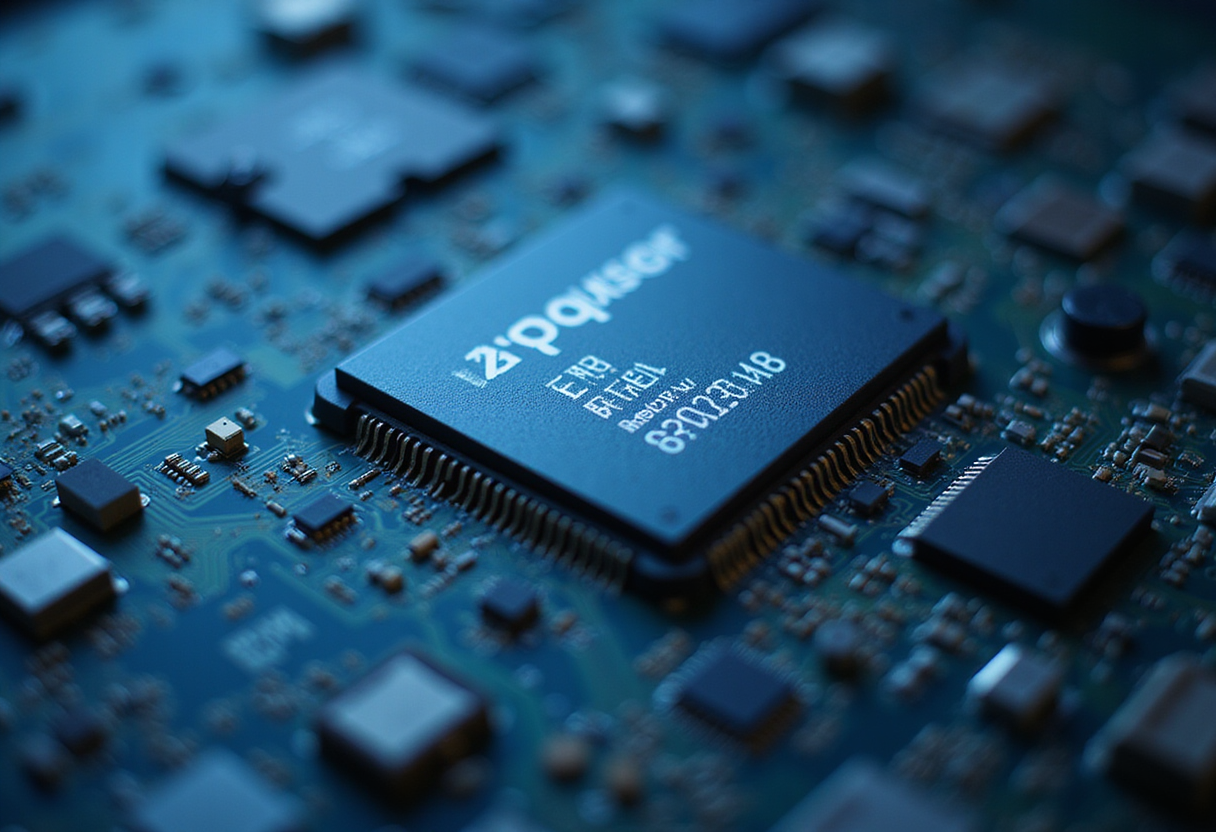
By Elena Vasquez
BrainChip has put its Sequora™ Edge AI processor IP up for license.
The move, reported by Kalkine, shifts the neuromorphic computing specialist's Sequora family from internal silicon development into the broader IP licensing market. For chip designers and OEMs evaluating on-device inference, that means another neural-network accelerator option is now reachable through procurement rather than finished-chip purchases.
What does licensing the IP actually change for buyers?
Practically everything that matters at the block-diagram stage. A licensee gets the design files to drop Sequora's processing architecture into an SoC of their own specification. They pick the process node, the SRAM budget, the power envelope, and the surrounding CPU cluster. BrainChip collects a fee plus royalty; the licensee owns the silicon.
That's a different commercial shape than buying a pre-built BrainChip chip off the shelf. The standalone part forces the customer into BrainChip's power, memory, and toolchain decisions. Licensed IP, by contrast, lets a customer blend Sequora logic with their own DSPs, microcontrollers, or application processors on one die. For mixed-signal SoC teams already running an Arm or RISC-V host, that gap matters.
Who's the customer now?
That question matters more than the announcement itself. Edge AI IP licensing is a buyers' market. Syntiant, Hailo, Arm Ethos, and the Ceva NeuPro family all compete for the same design slots at the same Tier-2 automotive, industrial, and IoT programs. Add the in-house ML cores from the larger DSP vendors, and the funnel gets crowded fast.
Sequora's distinct selling point is event-based, spiking neural network operation. That's useful for always-on keyword, vibration, and predictive-maintenance workloads, where conventional CNN accelerators stay idle most of the time. It's a narrower market than general-purpose edge inference, but a sticky one when it fits.
What numbers will designers want next?
Pricing, term structures, and process-node support weren't disclosed in the Kalkine report. Those three numbers are what practitioners will look for in the next data sheet.
- Per-project licensing fees in the edge AI IP market typically run in the low six figures, sometimes higher for unlimited-use rights
- Royalty rates generally land in the low single digits of chip revenue
- Reference silicon or FPGA platforms are now table stakes for any serious bidder
Where Sequora sits inside those bands will decide how many second-call RFPs it lands this quarter. Toolchain support is the other gating factor. An IP block is only as useful as its quantizer, simulator, and compiler. Neural-network IP that ships without a clean import path from PyTorch or TFLite tends to die in the evaluation phase.
For now, the headline is binary: the IP is available, or it wasn't. It is available. The next signal worth watching is the first announced licensee name attached to a specific tape-out. That's what will tell the market whether Sequora's licensing bid is a real pipeline or just a one-off.
via Google News: Edge AI processor (Source)
More from Elena Vasquez
Show full bio
Senior reporter covering people, launches and day-to-day practice in hardware layer of artificial intelligence at Die Signal.
340 articles
Same lot · LOT-C1CA
- DSG-247945nmQualcomm Shares Rise After Huawei AI Chip Patent Agreement
- DSG-131814nmMicrochip Acquires Edge AI Chip Maker Hailo
- DSG-62443nmMicrochip to Acquire Edge AI Processor Maker Hailo
- DSG-74807nmMicrochip Technology Signs Definitive Agreement to Acquire Hailo
- DSG-680514nmSEMIFIVE Signs $52M AI Chip Development Deal with US Company