Test report DSG-7480 · Rev C · tested September 29, 2026
Edge AI SiliconDevice under test
Microchip Technology Signs Definitive Agreement to Acquire Hailo
Microchip Technology has signed a definitive agreement to acquire edge AI processor developer Hailo. Terms were undisclosed. The deal awaits regulatory approvals before closing.
- Read
- 3 min
- Words
- 524
- Node
- 7nm
- Operator
- Priya Raman
Spec summary
- Microchip Technology signed a definitive agreement to acquire Hailo, announced via ir.microchip.com
- Hailo develops edge AI processors and accelerators for industrial, automotive, smart camera, and IoT applications
- Financial terms were not disclosed; the transaction remains subject to regulatory approvals
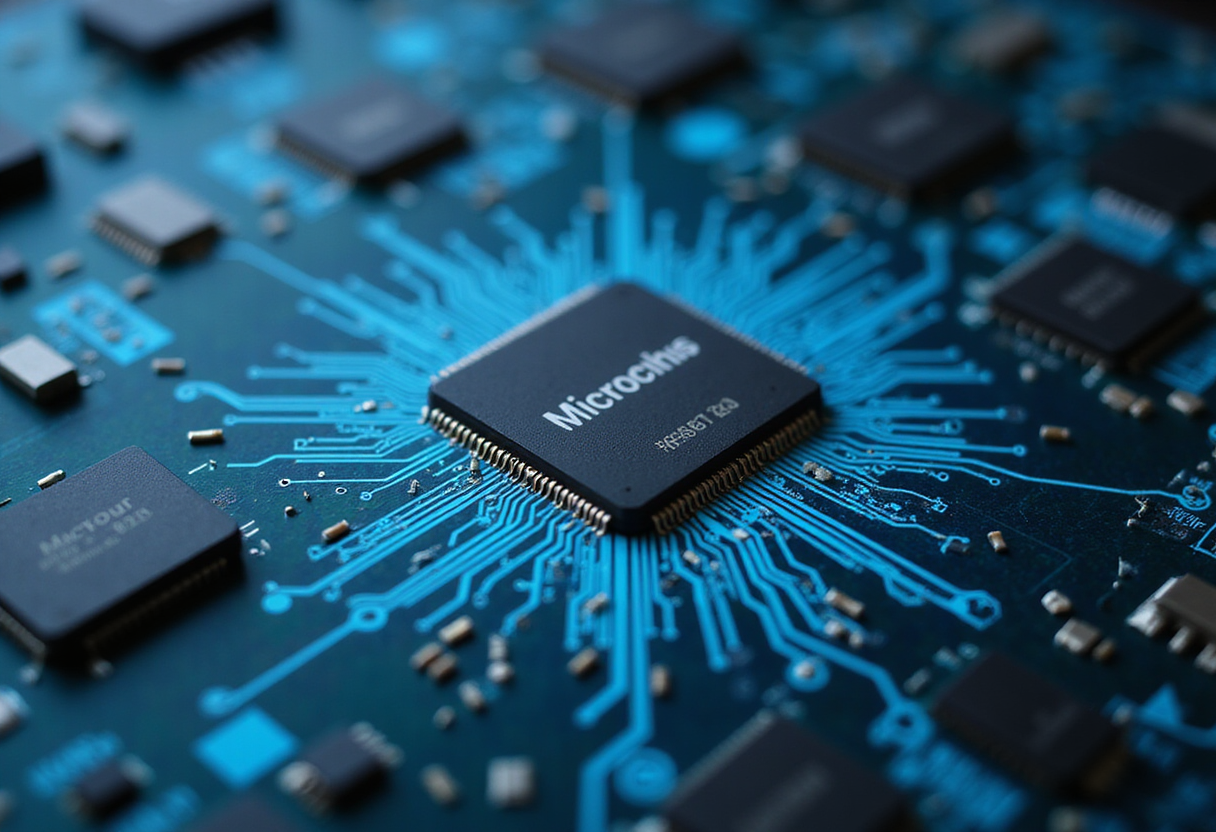
Microchip Technology has signed a definitive agreement to acquire Hailo, the Israeli developer of edge artificial intelligence processors. The company announced the transaction through its investor relations channel, ir.microchip.com. Financial terms of the deal were not disclosed in the announcement.
Hailo designs AI accelerators and AI vision processors that run machine learning workloads at the edge — on devices rather than in data centers. The company's product line includes modules aimed at applications such as smart cameras, industrial automation, automotive systems, and embedded platforms where power efficiency and real-time inference performance are the primary constraints.
For Microchip, the acquisition extends a portfolio that already spans microcontrollers, analog components, FPGA products, and connectivity solutions. Adding Hailo's edge AI silicon gives Microchip a direct position in a segment where customers increasingly demand on-device neural network inference alongside conventional control and signal-processing functions.
The deal structure follows a familiar pattern for Microchip, which has a long record of acquisitions across the semiconductor industry. The company has historically integrated acquired product lines into its distribution channels and manufacturing operations, then applied its operating model to improve margins. Whether Hailo's engineering teams and roadmap will fold into an existing Microchip business unit remains to be detailed in subsequent filings.
What the acquisition covers
Hailo's core products serve customers building systems that need computer vision and deep learning inference locally, without cloud round-trips. Key target markets include:
- Industrial equipment and factory automation
- Smart city and security camera infrastructure
- Automotive platforms requiring in-vehicle AI processing
- Embedded and IoT devices with strict power budgets
The acquisition signals that Microchip intends to pair its microcontroller and embedded processing franchises with dedicated AI acceleration, rather than relying solely on software libraries or partner silicon.
Market context
Edge AI processing has drawn heavy investment across the semiconductor sector over the past several years. Vendors of embedded processors face growing customer requirements for neural network workloads — object detection, classification, and anomaly detection — running on constrained hardware. Acquiring an established edge AI chip supplier offers Microchip a faster route to that capability than internal development.
For Hailo, the agreement provides access to Microchip's global sales channels, manufacturing scale, and long product lifecycle support, factors that matter to industrial and automotive customers evaluating silicon suppliers for multi-year deployments.
Next steps
The transaction remains subject to customary closing conditions, including regulatory approvals. Microchip has not yet published a projected closing date or detailed guidance on how the acquisition will affect its revenue or margins. Investors should expect further specifics — including purchase accounting details — in upcoming quarterly filings and conference calls.
Hailo will continue operating under its current structure until the deal closes, according to standard practice for transactions of this type.
Why it matters
The acquisition tightens the link between traditional embedded control silicon and AI acceleration. Customers building industrial, automotive, and IoT systems increasingly specify both capabilities in a single supply relationship. Microchip's move positions it to capture that demand with owned intellectual property rather than third-party partnerships.
Die Signal will continue to track the transaction as regulatory review proceeds and financial details emerge.
via Google News: Edge AI processor (Source)
More from Priya Raman
Show full bio
Correspondent covering money, funding and market shifts around hardware layer of artificial intelligence at Die Signal.
270 articles
Same lot · LOT-C1BA
- DSG-131814nmMicrochip Acquires Edge AI Chip Maker Hailo
- DSG-234628nmMicrochip Technology Acquires On-Device AI Processor Maker Hailo
- DSG-62443nmMicrochip to Acquire Edge AI Processor Maker Hailo
- DSG-14647nmMicrochip Technology Moves to Acquire AI Chipmaker Hailo
- DSG-515565nmMicrochip Technology Acquires Hailo to Expand Edge AI Portfolio