Test report DSG-4213 · Rev F · tested October 16, 2026
Supply Chain & PolicyDevice under test
Taiwan to Curb AI Chip Exports to China Under US Trade Deal
Taiwan will restrict AI chip exports to China under a US trade deal. Scope, chip definitions and implementation dates remain undisclosed.
- Read
- 3 min
- Words
- 588
- Node
- 65nm
- Operator
- Priya Raman
Spec summary
- Taiwan will curb AI chip exports to China as part of a trade deal with the United States.
- No implementation date, chip definitions, or enforcement mechanisms have been disclosed.
- The deal aligns Taiwan's export jurisdiction with US export-control policy toward China.
- Terms of what Taiwan receives in exchange are not public.
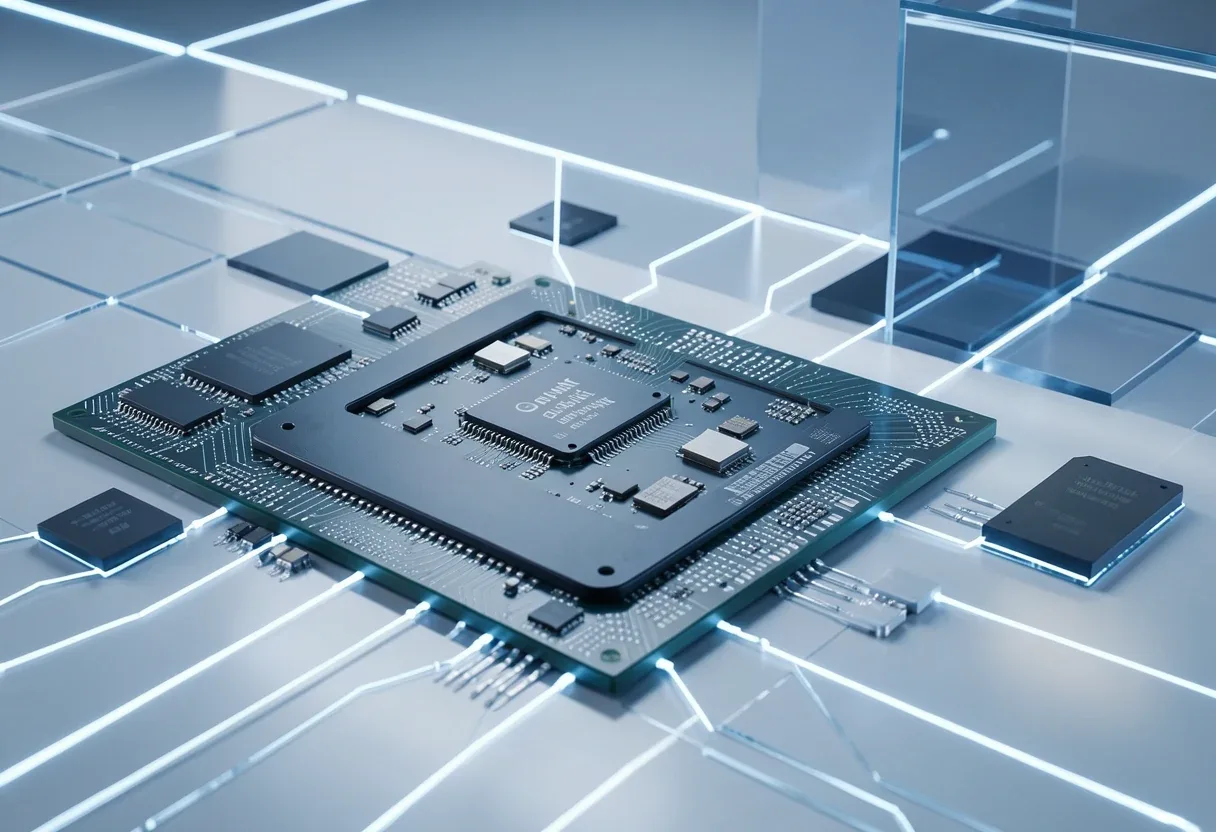
Taiwan will restrict exports of AI chips to China as part of a trade deal with the United States. The Straits Times reported the decision, which ties Taipei's export-control policy directly to Washington's trade negotiating agenda for the first time in this configuration.
Details remain scarce. Neither the reporting outlet nor the parties to the agreement have published the text of the deal, the categories of chips covered, or an implementation date. Every claim below should be read against that gap.
What does the agreement actually cover?
AI chips are processors designed to train and run machine-learning models, typically the highest-value products of fabs such as Taiwan Semiconductor Manufacturing Company. Export controls (government restrictions on what may cross a border) already limit China's access to cutting-edge US-designed silicon. This agreement extends that logic to Taiwan's own export jurisdiction.
The known parameters are minimal:
- Taiwan will curb AI chip exports to China.
- The curb forms part of a broader trade deal with the United States.
- No chip categories, volume thresholds, or enforcement mechanisms have been disclosed.
That absence of specification matters. A curb on finished AI chips has different market consequences than a curb on the equipment, wafers, or packaging services that feed chip production.
Who is affected?
Chinese buyers of AI accelerators face the most direct impact. US export rules since 2022 have already pushed Chinese firms toward grey-market intermediaries and domestic alternatives. Taiwan tightening its own rules narrows another channel, and the question of how strictly Taipei will police transit through third countries is unanswered.
Taiwanese suppliers face a different calculation. China remains a massive semiconductor market, and restricting sales there means revenue diverted to non-Chinese customers — or to Chinese domestic chipmakers such as those Beijing subsidises under its self-sufficiency programmes. The deal's terms determine how much revenue shifts and how fast.
Washington gains a policy instrument it has sought for years: alignment of allied export regimes with US controls, achieved through trade leverage rather than standalone diplomacy.
What is not being said?
Three omissions stand out.
First, no date. Without an implementation deadline, companies cannot plan procurement, and enforcement may lag announcement by months.
Second, no definition of "AI chip" appears in the public reporting. The term can span everything from datacentre accelerators to edge inference parts, and the breadth of the definition will decide the commercial impact more than the headline does.
Third, neither Washington nor Taipei has stated what Taiwan receives in return. A trade deal implies exchanged concessions. Those concessions are not public.
How does this fit the wider pattern?
Washington has spent three years constructing layered restrictions on China's access to advanced computing. It has pressured the Netherlands on lithography tools and Japan on chipmaking equipment. Taiwan, as the home of the world's leading contract fab, was the largest unresolved piece, and folding Taiwanese export policy into a bilateral trade agreement closes that gap in a way standalone control negotiations had not achieved.
The precedent deserves attention. If export controls now travel inside trade deals, future negotiations over tariffs or market access may carry attached technology-restriction clauses, and governments will read the fine print of trade agreements for exactly that reason.
What happens next?
Watch for the implementing regulation. It will reveal the chip definitions, licensing regime, and penalties. Until Taipei publishes those details, the announcement functions as a signal of alignment with Washington rather than an enforceable control. Signals shift; regulations are harder to reverse.
via Google News: AI chip (Source)
More from Priya Raman
Show full bio
Correspondent covering money, funding and market shifts around hardware layer of artificial intelligence at Die Signal.
394 articles
Same lot · LOT-C1CC
- DSG-42393nmTaiwan Moves to Restrict AI Chip Sales to China, Aligning With U.S.
- DSG-93415nmTaiwan Will Restrict AI Chip Exports to China Under US Trade Deal
- DSG-782745nmTaiwan Weighs Curbs on AI Chip Exports to China to Align With US
- DSG-972128nmTaiwan Weighs Tighter Rules for AI Chip Exports to China
- DSG-707645nmTaiwan Moves to Restrict AI Chip Sales to China, Bloomberg Reports