Test report DSG-4130 · Rev C · tested October 12, 2026
Memory & StorageDevice under test
Samsung, SK hynix NAND Profits Projected to Surge Up to 40-Fold
Samsung and SK hynix could see NAND flash profits rise as much as 40-fold, according to a projection reported by Businesskorea, marking a sharp swing for both memory makers.
- Read
- 2 min
- Words
- 426
- Node
- 28nm
- Operator
- Amara Osei
Spec summary
- Samsung and SK hynix NAND profits are projected to rise by up to 40-fold.
- The projection was reported by Businesskorea.
- The report did not specify a time frame or absolute profit figures.
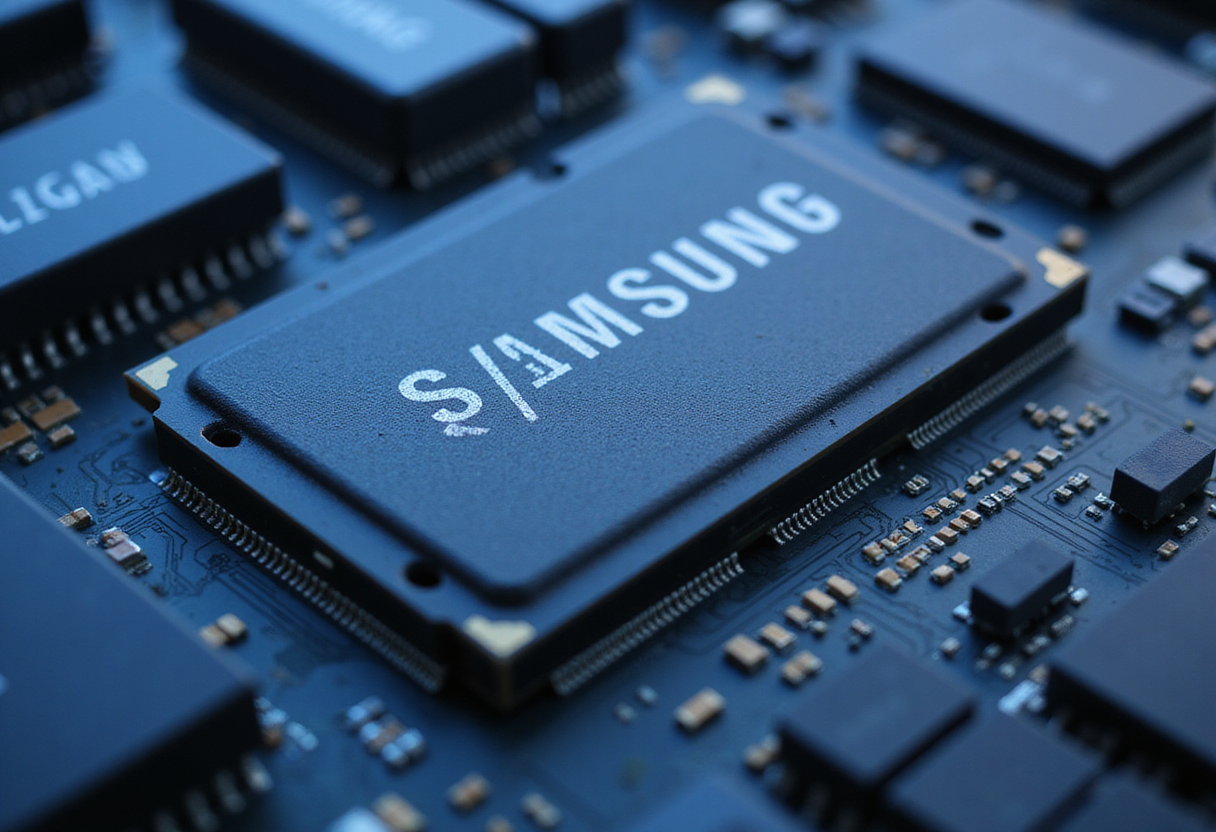
NAND flash profits at Samsung Electronics and SK hynix could rise as much as 40-fold, according to projections reported by Businesskorea.
The projection marks one of the sharpest profitability swings on record for the two Korean memory producers, whose NAND operations have spent recent quarters near break-even or in loss amid a prolonged industry downturn.
Why does a 40-fold jump matter?
A profit increase of that magnitude does not require an equally large revenue gain. When margins sit close to zero, even a moderate recovery in average selling prices can multiply operating profit many times over.
That dynamic has played out before in the memory cycle. Pricing discipline among suppliers, inventory normalization at customers, and demand growth from data centers can together push prices past the cost line, at which point incremental revenue converts almost entirely into profit.
For Samsung and SK hynix, the two largest NAND suppliers globally, the projected upswing would restore a business segment that both companies have treated as a drag on overall semiconductor earnings.
What could drive the turnaround?
Analysts tracking the memory sector typically point to a short list of levers for such a reversal:
- Pricing recovery — a stabilization or rise in NAND contract prices after an extended downcycle.
- Supply discipline — continued production cuts or slower capacity additions by the major suppliers.
- Demand pull — inventory restocking by device makers and growing storage requirements from AI-related data center workloads.
The report does not break down the relative weight of these factors in the 40-fold projection.
What remains uncertain?
Projections of this kind depend heavily on the timing and durability of the price recovery. Memory pricing moves quarter to quarter, and a single weak purchasing cycle can flatten a projected profit curve.
Both companies also face capital-allocation choices between NAND and their more profitable DRAM businesses, where high-bandwidth memory demand tied to AI accelerators has drawn the bulk of recent investment attention.
Investors and supply-chain watchers will look to upcoming quarterly results from both Samsung and SK hynix for confirmation — specifically, whether NAND segment operating margins have moved decisively off their recent lows and whether the companies guide toward sustained pricing strength.
The scale of the projected jump — up to 40-fold — signals how far NAND profitability fell during the downturn and how much operating leverage now sits in the segment if prices hold.
This article is based on a projection originally reported by Businesskorea; the underlying report did not disclose the specific time frame, absolute profit figures, or price assumptions behind the estimate.
via Google News: HBM memory (Source)
More from Amara Osei
Show full bio
Staff writer covering money, funding and market shifts around hardware layer of artificial intelligence at Die Signal.
280 articles
Same lot · LOT-C1C8
- DSG-159465nmSamsung Profit Jumps Nearly Nine-Fold on Memory Chip Windfall
- DSG-407820nmSamsung Profit Jumps Nearly Ninefold, Driven by Memory Chips
- DSG-560710nmSamsung Posts Record Profit on Memory Chip Demand
- DSG-748714nmSamsung Q3 Preliminary: Operating Profit Passes 100 Trillion Won
- DSG-659128nmSamsung Targets $80B Quarterly Profit as Memory Prices Bite