Test report DSG-6929 · Rev D · tested October 15, 2026
Memory & StorageDevice under test
NVIDIA's Rubin GPUs to Stay With 12-Hi HBM4, Report Says
NVIDIA's Rubin GPUs will reportedly keep 12-Hi HBM4 stacks, countering earlier 8-Hi reports, while HBM prices could jump 121% in 2027.
- Read
- 2 min
- Words
- 429
- Node
- 45nm
- Operator
- Marcus Bennett
Spec summary
- NVIDIA Rubin GPUs expected to use 12-Hi HBM4 stacks, per new report
- Earlier reports claimed a shift to 8-Hi HBM4 for Rubin
- HBM prices could surge 121% in 2027
- NVIDIA has not publicly confirmed either stack configuration
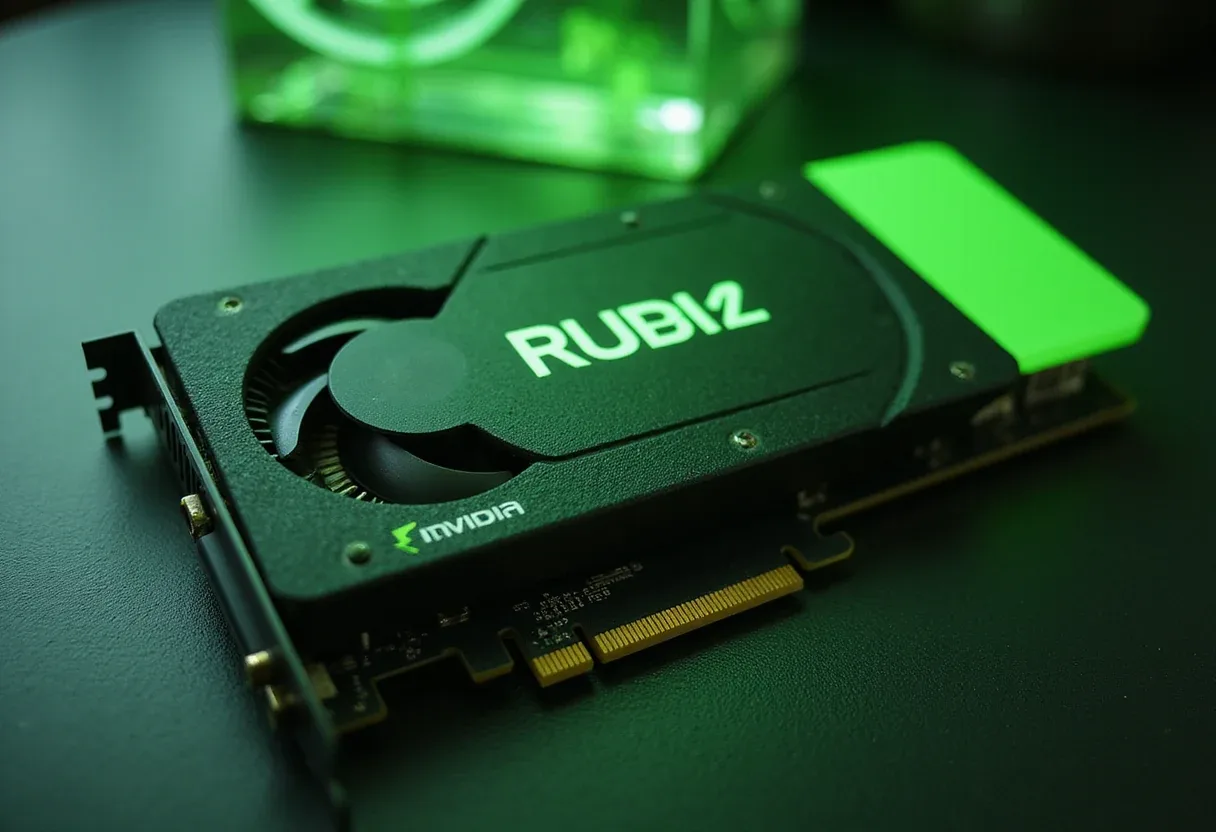
NVIDIA's next-generation Rubin GPUs are expected to keep 12-Hi HBM4 stacks, according to a new report, contradicting earlier claims of a switch to 8-Hi configurations. The same report forecasts HBM prices surging as much as 121% in 2027.
The claim comes from Wccftech. It directly contradicts prior reporting that NVIDIA planned to move Rubin from 12-high to 8-high HBM4 stacks. If the new report holds, Rubin's memory architecture stays on the denser of the two stack formats.
What does the stack-height dispute actually mean?
HBM4 modules ship in different physical configurations. The "Hi" number describes how many DRAM dies the manufacturer stacks vertically inside one package. A 12-Hi stack carries twelve dies. An 8-Hi stack carries eight.
More dies per stack means more capacity and more bandwidth per module. It also means lower total module counts for a given memory target. That matters for GPU board design, power delivery and yields.
An 8-Hi shift would have reduced per-package capacity. It would also have simplified manufacturing, since shorter stacks typically achieve better yields. The new report says NVIDIA will not take that trade.
Why might HBM prices surge 121%?
The 121% figure refers to 2027. The report frames it as a supply-and-demand outcome. AI accelerator demand keeps absorbing nearly all high-bandwidth memory output from the three suppliers that can make it: SK hynix, Samsung and Micron.
Rubin staying on 12-Hi HBM4 reinforces that pressure. Denser stacks consume more DRAM dies per module. If NVIDIA, the largest HBM buyer, locks in 12-Hi volumes through 2027, suppliers have less capacity left for other customers.
What does this change for buyers? Potentially a lot. A 121% price rise would flow into accelerator costs, and from there into cloud pricing and AI infrastructure budgets. Memory has historically been a swing factor in GPU cost structures.
Conflicting reports, unresolved question
Two reports now point in opposite directions. One said 8-Hi. The latest says 12-Hi. NVIDIA has not publicly confirmed either configuration.
Until NVIDIA states its stack height, treat both figures as supplier-side projections rather than product decisions. The 121% price forecast carries the same caveat. Price predictions for 2027 depend on capacity additions that suppliers have announced but not yet built.
The practical watchpoints are simple:
- Rubin silicon samples and their memory configurations
- Supplier capacity announcements for 12-Hi HBM4 in 2026-2027
- Contract pricing disclosures from SK hynix, Samsung and Micron
Each of those will settle the question faster than further supply-chain rumor.
via Google News: HBM memory (Source)
More from Marcus Bennett
Show full bio
News editor covering regulation, policy and their impact on hardware layer of artificial intelligence at Die Signal.
414 articles
Same lot · LOT-C1CB
- DSG-82203nmNvidia's Rubin to Lean on 12-Layer HBM4 Despite 8-Layer Reports
- DSG-847310nmHBM4 Demand Holds Firm As Nvidia's Rubin Keeps 12 Layers
- DSG-29493nmSK hynix, Samsung push 16-layer HBM4 as NVIDIA Rubin favors 12-layer
- DSG-695345nmSamsung HBM Prices Tipped to More Than Double by 2027
- DSG-76233nmHBM Average Selling Price Projected to Jump 121% Next Year