Test report DSG-5428 · Rev E · tested October 10, 2026
Memory & StorageDevice under test
Nvidia Cuts Rubin Ultra Memory; Micron HBM Outlook Tested
Nvidia is reducing memory capacity on the Rubin Ultra AI accelerator, a change that puts fresh pressure on Micron's high-bandwidth memory business and forces a reassessment of HBM allocations across the AI accelerator supply chain.
- Read
- 3 min
- Words
- 512
- Node
- 45nm
- Operator
- Grace Kim
Spec summary
- Nvidia is reducing memory capacity on its forthcoming Rubin Ultra AI accelerator
- Micron ranks as one of three primary HBM suppliers to Nvidia alongside SK Hynix and Samsung Electronics
- HBM has been Micron's fastest-growing product line in recent quarters
- SK Hynix holds the largest share of Nvidia HBM orders among the three qualified suppliers
- The cut narrows the performance gap between Rubin Ultra and the standard Rubin tier that follows the Blackwell generation
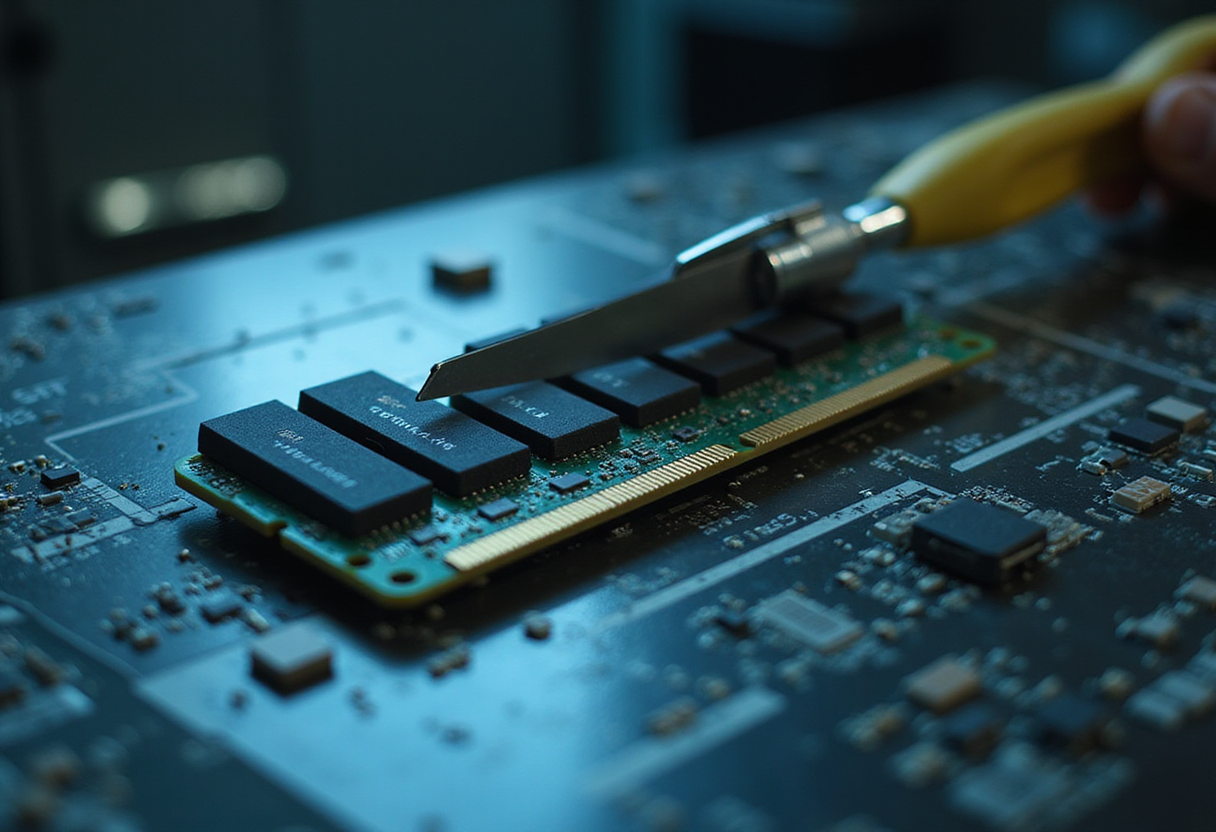
Nvidia is reducing memory capacity on its forthcoming Rubin Ultra AI accelerator, a move that puts fresh pressure on Micron Technology's high-bandwidth memory (HBM) business.
The change narrows the performance gap between the Rubin Ultra flagship and the standard Rubin tier that succeeds Nvidia's current Blackwell generation of GPUs.
What changes in the Rubin Ultra spec?
Rubin Ultra sits at the top of Nvidia's post-Blackwell GPU platform. Reducing its memory footprint lowers the per-package HBM content relative to what the market had modeled when the Rubin family was introduced.
The magnitude of the cut has not been disclosed publicly. Customers planning large-cluster AI training deployments will need to reassess capacity and bandwidth budgets that were sized to the original specification.
Why Micron's HBM business is exposed
Micron ranks as one of three primary HBM suppliers to Nvidia, alongside SK Hynix and Samsung Electronics. HBM has been Micron's fastest-growing product line in recent quarters, supported by sustained tightness in memory supply across the AI accelerator market.
Cutting HBM content on a flagship Nvidia package contracts the total bit demand tied to the Rubin Ultra roadmap. Micron's allocation sits behind SK Hynix's in Nvidia's order book, which means smaller absolute memory shifts move Micron's HBM revenue percentage more sharply than the market leader's.
The three-supplier dynamic favors SK Hynix, which qualified first on Nvidia's current generation and holds the largest share of Nvidia HBM orders. Samsung trails on qualification timing, while Micron has been the fastest mover in closing the qualification gap. HBM pricing has stayed elevated across the cycle as a result.
How it reshapes the AI accelerator market
Memory content is the largest single cost line on AI accelerator bills of materials. HBM pricing has held at a premium through the current cycle because supply has remained tight against demand from Nvidia, AMD, and the custom-silicon programs run by major hyperscalers.
The freed supply does not disappear. AI accelerator demand from non-Nvidia buyers continues to outpace HBM production capacity, and AMD's Instinct roadmap plus Google's TPU, Amazon's Trainium, and Microsoft's Maia programs all consume HBM at scale.
A Rubin Ultra memory cut frees HBM supply that would otherwise sit locked inside Nvidia's allocation queue. That capacity becomes available to competing accelerator buyers, including AMD's MI-series products and custom training silicon, though at the cost of removing a high-value shipment from Nvidia's supply chain.
What to watch next
Three signals will determine whether the cut derails Micron's HBM growth story or merely reshapes its customer mix:
- A revised Nvidia spec sheet and production timeline for the Rubin family
- Micron's quarterly disclosures on HBM revenue mix and qualification progress on next-generation memory products
- Allocation shifts among the three HBM suppliers across Nvidia and competing accelerator buyers
Until Nvidia clarifies the new memory configuration, Micron's HBM business remains tied to a flagship chip that now ships less memory than the market had assumed.
via Google News: HBM memory (Source)
More from Grace Kim
Show full bio
Market editor covering regulation, policy and their impact on hardware layer of artificial intelligence at Die Signal.
285 articles
Same lot · LOT-C1C6
- DSG-44147nmHBM Shortage Shifts Power to Micron, Squeezes Nvidia Margins
- DSG-959345nmMicron Targets NVIDIA Custom HBM Standards in TSMC Partnership
- DSG-26367nmMicron Quarterly Results Nearly Quadruple on AI Demand Surge
- DSG-750314nmMemory supply tightens around AI demand, Equiti analysis shows
- DSG-91507nmSamsung Secures 70% of HBM Memory Capacity Through 2031