Test report DSG-5017 · Rev F · tested October 15, 2026
AI Datacenter InfrastructureDevice under test
Nvidia and Cisco Team Up on Network Interface for AI Data Centers
Nvidia and Cisco have unveiled a next-generation network interface card built to handle the traffic patterns of AI data centers. Here is what the partnership covers and where it fits.
- Read
- 3 min
- Words
- 548
- Node
- 7nm
- Operator
- Marcus Bennett
Spec summary
- Nvidia and Cisco jointly announced a next-generation network interface
- The product targets AI data center workloads
- The announcement was reported by TechSpot
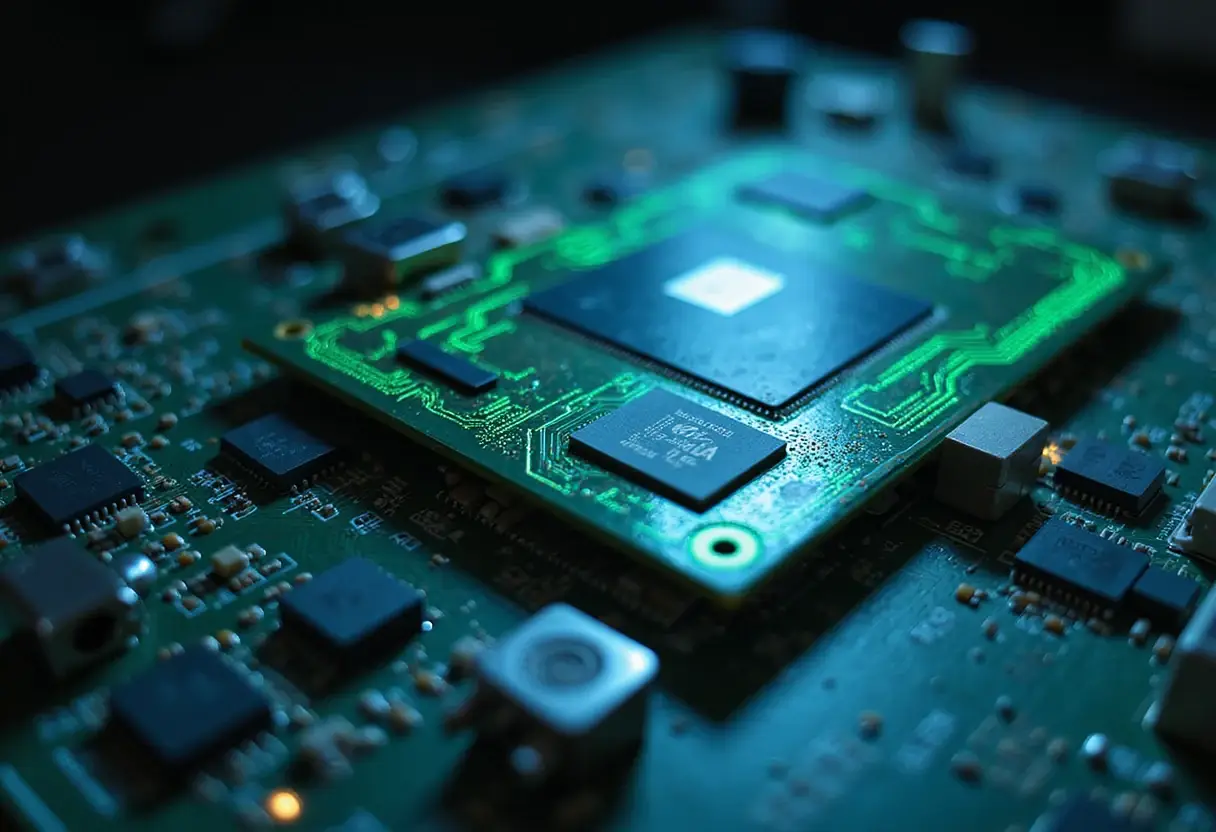
Nvidia and Cisco have unveiled a jointly developed network interface aimed at AI data centers. TechSpot reported the announcement. The two companies position the product as purpose-built networking hardware for AI workloads rather than a general-purpose upgrade.
The deal matters because of who signed it. Nvidia supplies the dominant compute platforms for AI training. Cisco supplies a large share of enterprise networking gear. A joint interface product links the two stacks at a point where AI clusters often run into trouble: the connection between servers and the network fabric.
Why the network interface is the bottleneck
AI training does not behave like ordinary data center traffic. A training job spreads one model across hundreds or thousands of GPUs. Those GPUs exchange gradient updates constantly. The traffic is synchronized, bursty, and sensitive to delay in a way that web serving traffic is not.
The network interface card sits between the GPU memory and the switch fabric. If it cannot keep up, expensive accelerators sit idle while data moves. That idle time is the cost driver. Networking vendors have treated this gap as the main engineering problem of AI infrastructure for several product cycles.
What does the partnership change for buyers?
The practical question for data center operators is simple: does this reduce integration risk? A Cisco-Nvidia pairing suggests the answer is yes, at least for shops that already run both vendors. Joint development means the interface, drivers, and fabric configuration ship as one supported stack instead of a compatibility matrix buyers must test themselves.
For enterprises, that is the real story. AI clusters fail most often at the seams between components. A vendor pair that tests those seams in advance shortens deployment time. It also narrows the field of alternatives buyers must evaluate.
Where this fits in the broader market
The announcement lands in a market where AI infrastructure spending keeps rising and networking is an increasingly large slice of it. Every major vendor now frames its roadmap around AI traffic. Ethernet and InfiniBand camps compete over which fabric should carry AI workloads at scale.
Nvidia already sells its own networking portfolio alongside its compute products. Cisco brings its enterprise install base and channel. A shared interface product lets each side defend its turf while addressing customers who want both. Buyers should expect the usual trade-off: tighter integration on one hand, stronger vendor lock-in on the other.
What to watch next
Watch for three things. First, availability and pricing details, which the announcement stage has not yet pinned down. Second, performance specifications: line rate, latency figures, and supported switch platforms will determine whether the product competes on benchmarks or on integration convenience alone. Third, ecosystem support, meaning which switch lines and GPU generations qualify.
Until those details arrive, treat this as a positioning move. Two large vendors have agreed that AI networking needs purpose-built interfaces, and they intend to build them together. That signal alone will shape procurement conversations in enterprise data centers over the coming cycle.
The product also marks another step in the slow merger of compute and networking roadmaps. For years the two product lines moved on separate schedules. AI workloads broke that arrangement. Expect more joint announcements of this kind as vendors race to remove every bottleneck between GPUs.
via Google News: GPU datacenter (Source)
More from Marcus Bennett
Show full bio
News editor covering regulation, policy and their impact on hardware layer of artificial intelligence at Die Signal.
418 articles
Same lot · LOT-C1CB
- DSG-60123nmNvidia Takes the Lead in Data Center Ethernet Switching, IDC Finds
- DSG-55275nmCisco and Nvidia target enterprise AI with rack-scale systems
- DSG-823214nmUpscale AI launches platform to interconnect rival-vendor AI chips
- DSG-34013nmNVIDIA and Coherent Partner on Optics for Next-Gen Data Centers
- DSG-15747nmNvidia-backed Upscale AI launches platform to link rival chips