Test report DSG-9862 · Rev C · tested October 12, 2026
AI Datacenter InfrastructureDevice under test
Microsoft to Scale Custom AI Chips in Multi-Gigawatt Push
Microsoft will scale custom AI chips across multi-gigawatt datacenter capacity in a cost-reduction push, StreetInsider reports, moving in-house silicon toward volume deployment.
- Read
- 2 min
- Words
- 370
- Node
- 20nm
- Operator
- Grace Kim
Spec summary
- Microsoft plans to scale custom AI chips across multi-gigawatt compute capacity
- The initiative's stated goal is cutting AI infrastructure costs
- The report moves Microsoft's in-house silicon beyond limited pilots toward volume deployment
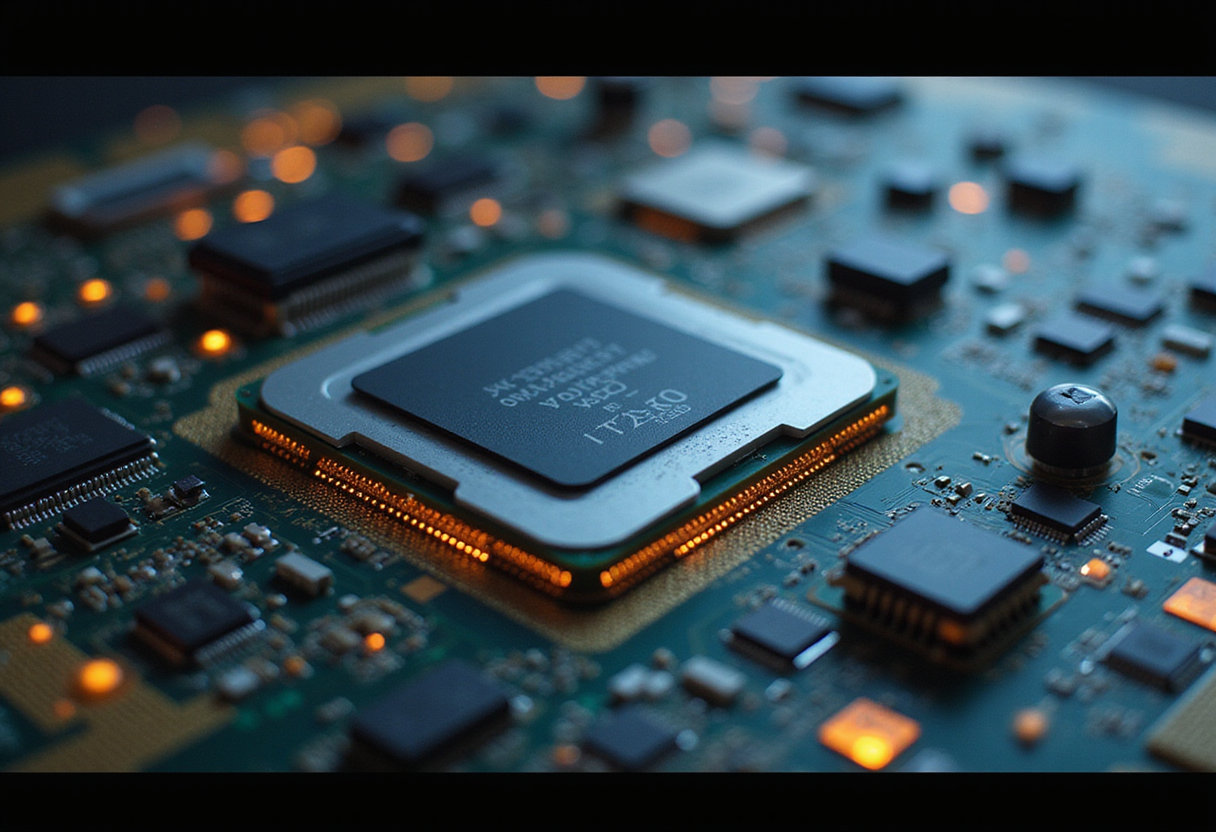
Microsoft plans to scale deployment of its custom AI chips across datacenter capacity measured in multiple gigawatts, as part of a cost-reduction push for its AI infrastructure, StreetInsider reported under the headline "Microsoft to scale custom AI chips in multi-gigawatt push to cut costs."
The report signals that the company intends to move custom accelerators from limited pilots toward volume deployment, covering compute capacity on a multi-gigawatt scale rather than single-facility rollouts.
Why does Microsoft want its own AI silicon?
Custom chips serve one primary purpose in hyperscaler strategy: reducing dependence on merchant suppliers and cutting per-token compute costs. Building and operating AI training and inference fleets at multi-gigawatt scale makes procurement economics a first-order constraint on margins.
The reported initiative places Microsoft in line with other large cloud operators that design proprietary accelerators to complement — and in some workloads replace — third-party GPUs.
What does "multi-gigawatt" mean in practice?
A multi-gigawatt deployment implies AI compute capacity measured across entire datacenter campuses, not individual server racks. Scaling custom silicon to that level requires:
- Guaranteed wafer supply and packaging capacity at foundry partners
- Software stacks that let internal workloads run on first-party accelerators
- Datacenter power and cooling provisioned for dense AI clusters
The StreetInsider headline explicitly ties the chip scaling effort to cost reduction, indicating the economics of serving AI workloads — rather than performance alone — as the driver.
What remains unconfirmed?
The headline-level report does not specify:
- Which chip generations are covered by the scaling plan
- A deployment timeline or specific gigawatt figures
- Named foundry or design partners
- How the effort affects existing GPU supplier relationships
What does this change for the AI hardware market?
If Microsoft moves custom accelerators into multi-gigawatt production, merchant GPU vendors face a large buyer shifting part of its demand in-house. For foundries and packaging suppliers, hyperscaler custom-silicon programs represent a growing share of advanced-node demand.
The cost angle matters for Microsoft's AI services pricing: cheaper compute per workload translates directly into margin headroom for AI features across its cloud and product portfolio.
Die Signal will track chip-specific specifications, supplier detail and deployment timelines as fuller technical disclosures emerge.
via Google News: AI chip (Source)
More from Grace Kim
Show full bio
Market editor covering regulation, policy and their impact on hardware layer of artificial intelligence at Die Signal.
282 articles
Same lot · LOT-C1C8
- DSG-196945nmMicrosoft to Scale Custom AI Chips in Multi-Gigawatt Push
- DSG-149945nmMicrosoft Targets Gigawatt-Scale Maia AI Chip Deployment by 2027
- DSG-95967nmMicrosoft Targets Multi-Gigawatt Maia AI Chip Rollouts
- DSG-928845nmMicrosoft to deploy huge fleet of in-house AI chips for cost savings
- DSG-91905nmMicrosoft's New AI Chip Reduces Dependence on Nvidia GPUs