Test report DSG-5100 · Rev E · tested October 10, 2026
Memory & StorageDevice under test
Micron ends 2GB GDDR7 production, shifts 3GB silicon to AI GPUs
Micron has discontinued its 2GB-density GDDR7 memory for gaming GPUs, redirecting capacity to 3GB GDDR7 silicon for data-center AI accelerators, Tom's Hardware reported.
- Read
- 2 min
- Words
- 488
- Node
- 65nm
- Operator
- Amara Osei
Spec summary
- Micron discontinued 2GB-density (16Gb) GDDR7 chips previously used in gaming GPUs.
- Production capacity shifts to 3GB-density (24Gb) GDDR7 dies for AI accelerators.
- Micron's 3GB GDDR7 parts are described as 'high-margin' in the source report.
- Three DRAM suppliers — Samsung, SK Hynix, and Micron — collectively produce GDDR7.
- Tom's Hardware first reported the production shift.
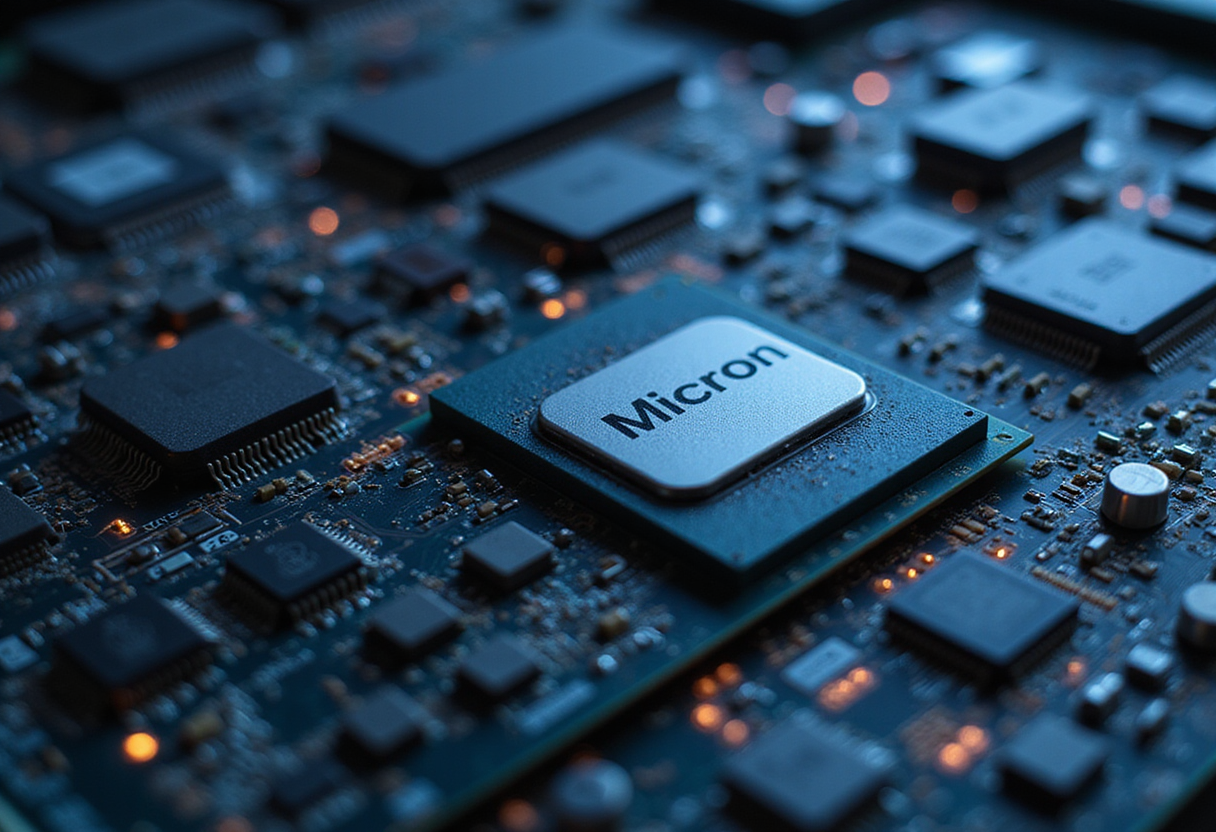
Micron has discontinued its 2GB-density GDDR7 memory chips for gaming graphics cards, redirecting production capacity to higher-density 3GB GDDR7 silicon for AI accelerators, Tom's Hardware reported.
The move ends Micron's 16Gb-class GDDR7 die output as the company allocates fab time to 24Gb (3GB) parts feeding data-center GPUs used for AI training and inference. The 3GB devices now carry priority status in Micron's DRAM lineup, the report said.
What changed in the lineup?
A 2GB GDDR7 chip carries a single 16Gb DRAM die on a small PCB substrate. Micron's withdrawal leaves two densities in its GDDR7 catalog: 24Gb (3GB) and 32Gb (4GB).
The decision narrows sourcing options for board partners designing entry-level discrete GPU cards, where per-die cost dominates bill of materials. AI accelerator cards, by contrast, pack dozens of DRAM dies per board and pull the most value from denser packaging.
Why the reallocation?
Higher-density DRAM dies reduce per-bit packaging cost and board trace counts. AI accelerator boards routinely carry 24GB, 48GB, 80GB, or more of GDDR7, so 3GB dies cut board area per gigabyte of capacity.
Margin economics reinforce the move. Tom's Hardware characterized Micron's 3GB GDDR7 parts as "high-margin," reflecting stronger per-bit pricing in accelerator-class memory than in consumer gaming DRAM.
Gaming GPU shipments have trended weaker over the past year as notebooks and integrated graphics absorbed entry-level demand. AI accelerator revenue, by contrast, grew sharply across major chip vendors over the same period.
Where does the rest of the industry stand?
Three DRAM suppliers — Samsung Electronics, SK Hynix, and Micron — share the global graphics memory market. All three qualified GDDR7 across multiple densities as the standard succeeded GDDR6X. GDDR7 supports higher per-pin data rates than its predecessor, satisfying both ray-traced gaming and large-context AI inference workloads.
Memory makers have tilted capital spending toward high-bandwidth memory for data-center GPUs while conventional graphics DRAM receives proportionally less investment. The Micron pivot confirms that AI workloads now rank ahead of gaming for new product introduction and capacity allocation across the DRAM industry.
What does it mean for board partners?
Gaming board vendors building 8GB or 12GB GDDR7 cards typically source four to six 2GB chips. With Micron out of 16Gb GDDR7, those designs must pull the entry-level density exclusively from competitors. Both Samsung and SK Hynix continue shipping 16Gb GDDR7 in volume, leaving consumer GPU supply largely intact.
For AI accelerator customers, the reallocation tightens supply of Micron's 3GB GDDR7 — the chipmaker's now-priority part — at a moment when AI accelerator vendors compete aggressively for memory allocation.
What's next?
Micron has not announced a successor gaming-class GDDR7 density to replace the 2GB part. Industry observers expect 24Gb and 32Gb GDDR7 to capture an increasing share of board designs across consumer and AI segments as 16Gb parts fade from premium lineups.
via Google News: DRAM chip (Source)
More from Amara Osei
Show full bio
Staff writer covering money, funding and market shifts around hardware layer of artificial intelligence at Die Signal.
280 articles
Same lot · LOT-C1C6
- DSG-698228nmMicron Earnings: AI Chip Demand Drives Fresh Memory Boom
- DSG-258745nmApacer CEO Warns of 70% DRAM Module Supply Drop in 2027
- DSG-31465nmMicron Q3 Results: AI Demand, HBM Gains, Supply Limits Frame Outlook
- DSG-750314nmMemory supply tightens around AI demand, Equiti analysis shows
- DSG-878265nmMicron's Quarterly Revenue Quadruples Year Over Year on AI Demand