Test report DSG-4304 · Rev C · tested October 15, 2026
AI Datacenter InfrastructureDevice under test
Meta expands Nvidia deal to millions of AI chips, adds standalone CPUs
Meta Platforms has expanded its Nvidia procurement agreement to cover millions of artificial intelligence chips across an ongoing data center build-out, including standalone CPUs outside the GPU lineup.
- Read
- 3 min
- Words
- 551
- Node
- 28nm
- Operator
- Priya Raman
Spec summary
- Meta has expanded its Nvidia agreement to cover millions of AI chips, according to the CNBC report; a specific unit count was not disclosed.
- The order includes standalone CPUs, extending procurement beyond Nvidia's primary GPU product line.
- Financial terms, contract duration, and the breakdown between accelerators and CPUs were not disclosed in the report.
- The procurement targets Meta's data center build-out tied to AI training capacity and inference workloads for advertising systems.
- Nvidia's AI accelerator supply chain runs through Taiwan Semiconductor Manufacturing Company fabrication and CoWoS packaging lines that have operated near full utilization since 2023.
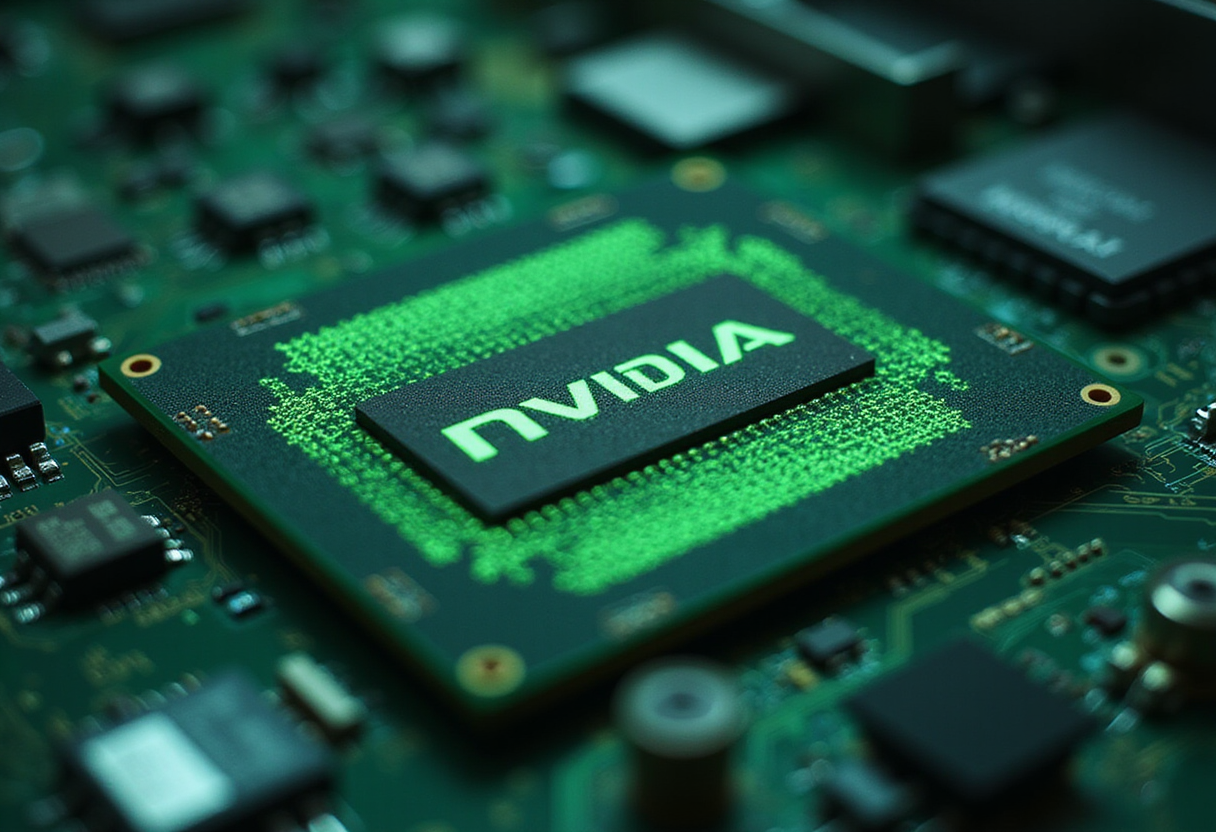
Meta Platforms has expanded its procurement agreement with Nvidia to encompass millions of artificial intelligence chips, according to a CNBC report. The revised order covers an ongoing data center build-out and extends to standalone CPUs, a category outside Nvidia's dominant GPU lineup.
The headline figure—millions of chips—places the deal in the upper tier of disclosed hyperscale procurement volumes. Exact unit counts were not specified in the report, leaving industry observers to estimate scale from prior procurement patterns rather than confirmed contract figures.
CPU inclusion marks the substantive development. Nvidia entered the standalone CPU market to compete with established vendors in general-purpose compute, defined as non-AI tasks such as web serving, storage management, and database operations. The Meta order, if confirmed at scale, would constitute a reference deployment for Nvidia's data center CPU product line in the hyperscaler market.
What does the standalone CPU component change for Nvidia's competitive position?
Track record shifts. The company has historically captured CPU revenue as part of bundled accelerator packages rather than through direct procurement contracts. Pure CPU orders from a hyperscaler test the standalone demand previewed by executives on prior earnings calls.
The report does not disclose financial terms, contract duration, or a chip-count breakdown between accelerators and standalone CPUs. These omissions are material. Without a shipment schedule, the impact on Nvidia's revenue recognition cannot be quantified by outside observers, and analysts will likely model the headline figure conservatively until contract details emerge from earnings commentary or regulatory filings.
What remains unknown about the silicon allocation?
Nvidia's CPU line competes in a market historically dominated by x86 architecture, the instruction set underlying Intel and AMD processors. Adoption of Nvidia CPUs by Meta at scale would test whether the company's GPU market position translates into standalone CPU share, a question with multi-year revenue implications for both incumbents and the challenger.
Manufacturing capacity remains the binding constraint across the industry. Nvidia's most advanced AI accelerators rely on Taiwan Semiconductor Manufacturing Company fabrication and CoWoS packaging lines, the latter referring to Chip-on-Wafer-on-Substrate technology that combines multiple silicon dies into one package. These production lines have operated near full utilization since 2023, based on Nvidia's prior earnings commentary. A large Meta commitment enters a constrained queue alongside orders from Microsoft, Google, and Amazon.
The build-out aligns with Meta's disclosed capital expenditure trajectory. The company has signaled rising infrastructure spend tied to AI workload expansion, including training capacity for the Llama family of large language models and inference capacity, meaning the production deployment of trained models, for advertising ranking systems that now incorporate multimodal processing on a growing share of queries.
Diversification appears to be the procurement logic. Meta has historically sourced general-purpose compute from Intel and AMD. Adding Nvidia to that vendor roster creates a third supplier for the basic data center CPU, a hedge against the chip shortages that constrained the 2024 procurement cycle across the industry.
Market reaction was not captured in available trading data at the time of the CNBC report. Nvidia's shares have moved on elevated turnover through recent sessions amid broader AI infrastructure spending announcements from peer hyperscalers, though direct attribution to the Meta expansion cannot be confirmed without intraday filings.
via Google News: GPU datacenter (Source)
More from Priya Raman
Show full bio
Correspondent covering money, funding and market shifts around hardware layer of artificial intelligence at Die Signal.
344 articles
Same lot · LOT-C1CB
- DSG-599828nmNvidia Aims to Supply Every Chip Inside AI Data Centers
- DSG-823214nmUpscale AI launches platform to interconnect rival-vendor AI chips
- DSG-91905nmMicrosoft's New AI Chip Reduces Dependence on Nvidia GPUs
- DSG-247428nmAmazon to Buy 2 Million Nvidia Chips for Data Center Build-Out
- DSG-986810nmAmazon Seeks to Offload $8bn of Nvidia Chips to Investors