Test report DSG-7414 · Rev C · tested October 13, 2026
AI Datacenter InfrastructureDevice under test
Legrand to embed Karman AI platform into data center PDUs
Legrand will integrate Karman's energy-AI platform into its intelligent AC rack PDUs and DC power shelves, claiming operators can pull 50% or more AI tokens from the same provisioned power — without new utility feeds.
- Read
- 3 min
- Words
- 622
- Node
- 20nm
- Operator
- Elena Vasquez
Spec summary
- Legrand will embed Karman's AI platform into its intelligent AC rack PDUs and DC power shelves for high-density AI data centers.
- Partners claim operators can generate 50% or more AI tokens from the same provisioned power under the integration.
- Karman's module runs on a customized Nvidia Jetson Orin Nano, which the firm says delivers 100x the processing power of comparable meter-based solutions.
- Karman rebranded from Utilidata earlier this month, having closed a $60.3 million Series C in June led by Renown Capital Partners.
- The June Series C included Quanta, Nvidia, and existing investor Keyframe Capital, with proceeds earmarked to scale the platform.
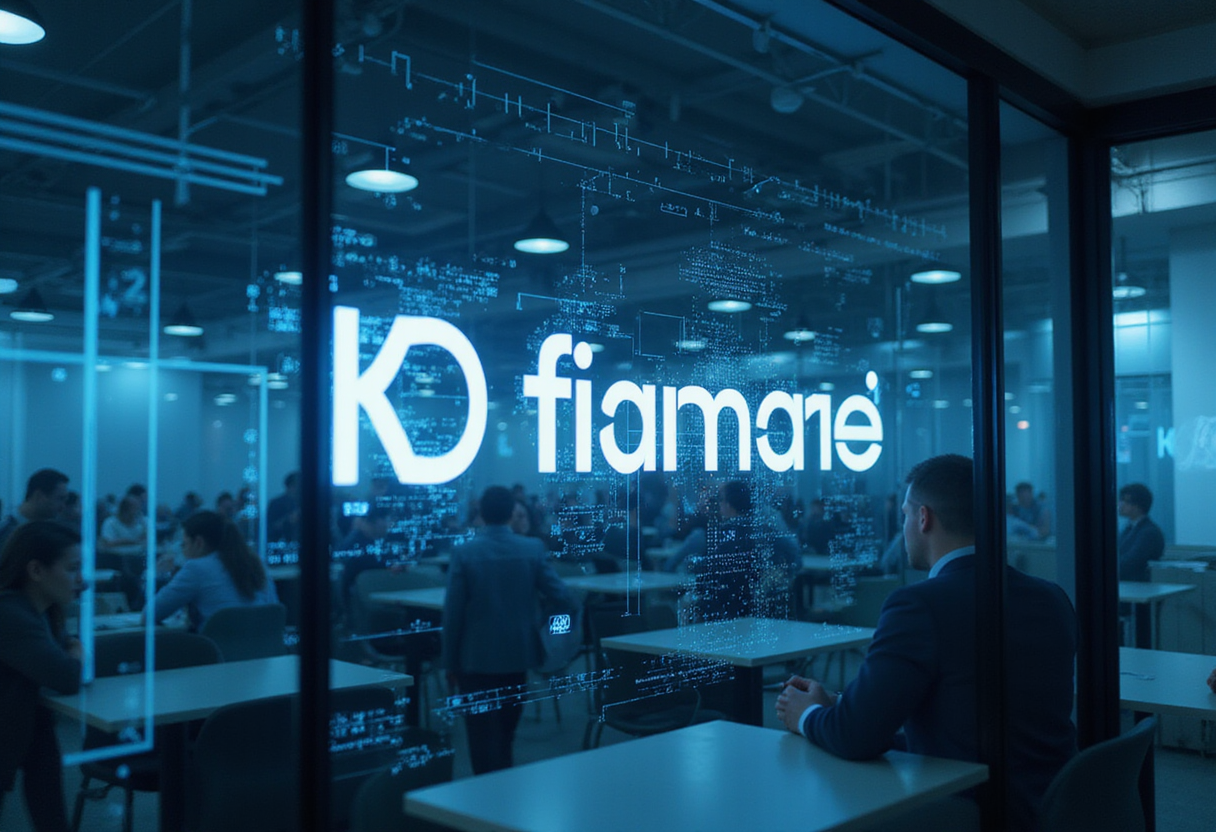
A partnership between energy-AI platform Karman and Legrand will embed real-time grid optimization directly into the French group's data center rack PDUs and DC power shelves, with the partners claiming operators can pull 50% or more AI tokens from the same provisioned power.
The integration targets Legrand's intelligent AC rack PDUs and DC power shelves — both built for high-density AI halls. Karman's stack runs on a customized Nvidia Jetson Orin Nano module that the firm says delivers 100 times the processing power of comparable meter-based solutions, letting it coordinate millions of endpoints in real time.
Karman rebranded this month from Utilidata and closed a $60.3 million Series C in June. Renown Capital Partners led the round, with Quanta, Nvidia, and existing investor Keyframe Capital also on the cap table.
What changes for operators?
For data center teams, the pitch is straightforward: power, not silicon, is the binding constraint now. Karman's CEO Josh Brumberger frames it bluntly: "Power continues to be the primary limiting factor to data center capacity expansion. Yet, a large portion of provisioned power in data centers goes untapped."
Moving the optimization layer onto the rack itself — rather than running it from a control-room stack — means visibility and dispatch decisions land at the meter edge, close enough to react to load conditions without round-tripping to a central system.
Brumberger tied the deal to GPU economics directly: "By embedding Karman into Legrand's power distribution products, data center operators can now utilize that power to expand capacity immediately, while reducing the price per GPU hour."
What does the hardware actually do?
Karman's stack performs three concrete tasks inside the PDU and shelf:
- Identifies distributed energy resources sitting on-site or nearby
- Coordinates those DERs to shift load against real-time grid signals
- Adjusts power draw per rack based on what downstream GPUs can actually use
The platform also integrates with smart meters, giving utilities a parallel view of what happens behind the customer meter. That dual role — grid operator's eye on one side, tenant controller on the other — is what makes the Legrand deal interesting, because it parks one device in both camps.
How big is the efficiency claim?
The 50% AI-token figure is a partner claim, not a third-party benchmark. Karman's argument is that most racks run well below their provisioned ceiling because the control software can't schedule against transient headroom.
Legrand's Data Power and Control CTO Swen Anderson tied the deal to operator ROI: "We're providing data centers with the tools to unlock stranded power and deliver measurable competitive advantages and increased revenue."
For a 100 MW hyperscale hall, a 50% effective capacity gain equates to roughly the compute equivalent of a 50 MW utility feed — except without the multi-year interconnect queue and the multi-million-dollar substation build that comes with it. That's the math behind Anderson's framing of the deal as a continuation of Legrand's "technological leadership and innovation" in the data center power space.
What's next?
Karman and Legrand haven't disclosed a shipping date or per-port licensing fee. Both companies have framed the work as integration of Karman's platform into Legrand's existing rack hardware, not a fresh chassis design.
Legrand's PDU and shelf channels give Karman its first volume route into the data center, which until now has been served mostly through utility smart-meter programs.
Operators evaluating the integrated PDU will want two things before signing: third-party benchmark data on the 50% claim, and clarity on how the platform behaves when the on-site DERs it coordinates actually go offline. Neither has been published yet.
via Data Center Dynamics (Source)
More from Elena Vasquez
Show full bio
Senior reporter covering people, launches and day-to-day practice in hardware layer of artificial intelligence at Die Signal.
320 articles
Same lot · LOT-C1C9
- DSG-599665nmNvidia Forms Alliance to Build Power-Flexible AI Data Center
- DSG-16975nmNvidia's green-power push targets grid bottlenecks, revenue shield
- DSG-55275nmCisco and Nvidia target enterprise AI with rack-scale systems
- DSG-58583nmMorgan Stanley: AI power crunch strains chip supply chain
- DSG-503714nmEmerald AI Draws Google, Nvidia, Anthropic for Grid-Flexibility Work