Test report DSG-8779 · Rev D · tested October 16, 2026
Memory & StorageDevice under test
Korea's Memory Glut Could Double as Leverage Over China
An oversupplied memory market may hurt Korean chipmakers' margins while raising entry costs for China's state-backed rivals, The Korea Herald argues.
- Read
- 2 min
- Words
- 433
- Node
- 10nm
- Operator
- Amara Osei
Spec summary
- The Korea Herald argues a memory chip glut could serve as Korea's strategic counter to China's chip ambitions.
- Korea's memory sector is dominated by Samsung Electronics and SK hynix.
- Falling prices from oversupply raise entry costs for newer Chinese competitors.
- The analysis frames the glut as a strategic opening, not a permanent barrier to China's memory push.
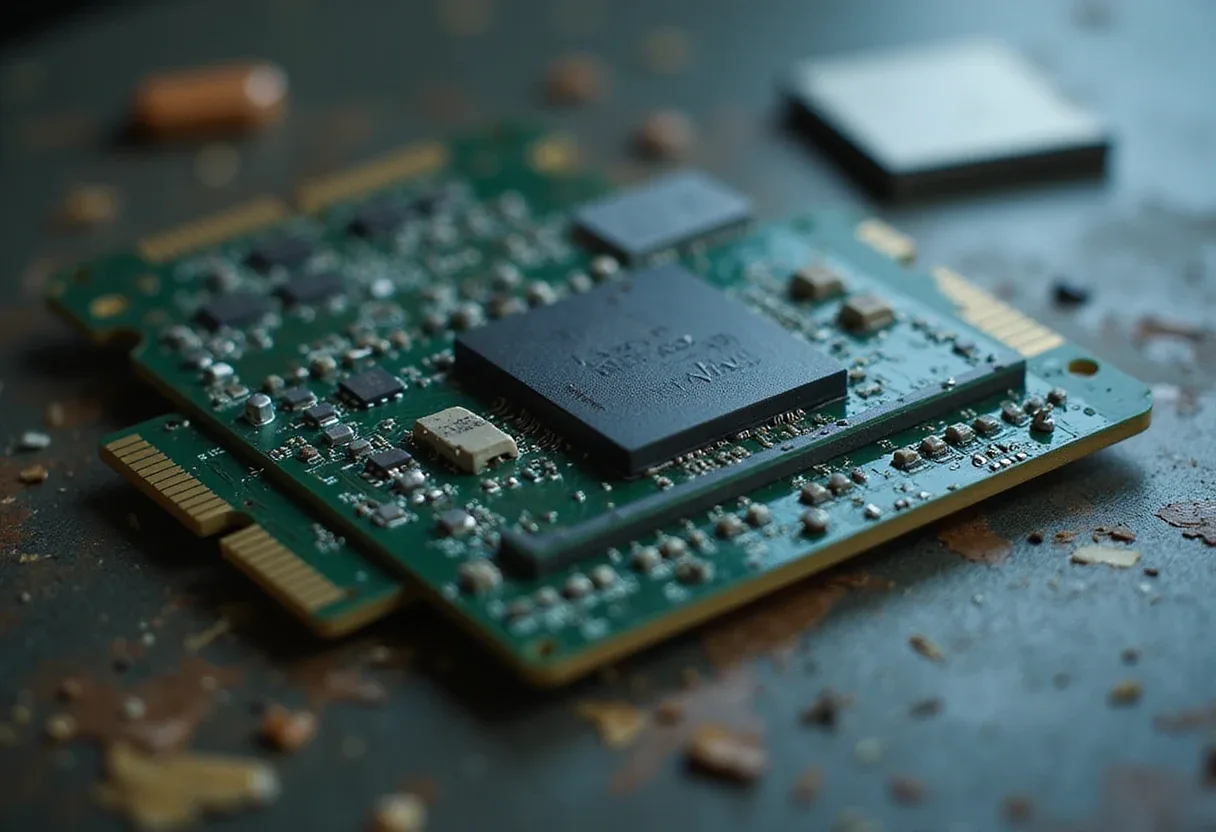
A memory chip glut — normally a threat to Korean semiconductor earnings — could instead become Seoul's main lever against Beijing's push into the memory market, according to an analysis published by The Korea Herald.
The argument rests on a straightforward market mechanism. Korea's two dominant memory producers, Samsung Electronics and SK hynix, supply a large share of the world's DRAM and NAND flash. China is working to build a domestic memory industry of its own. When supply runs ahead of demand, prices fall, and the cost of capital-intensive expansion becomes harder for any newcomer to bear.
Why does oversupply favor the incumbents?
Memory manufacturing rewards scale. Existing producers can absorb lower prices for longer because their fabs are already built and depreciated. A challenger that still needs to fund construction, hire engineers and qualify products with customers faces those falling prices at the worst possible moment.
The Korea Herald's analysis frames this dynamic as a strategic asset for Seoul: the same glut that squeezes Korean margins also raises the cost of entry for Chinese competitors. In effect, Korea can endure a period of low prices that China's nascent memory sector cannot yet match.
What does this mean for Korean policy?
The analysis suggests Seoul should not treat oversupply purely as a problem to be managed through production cuts. Viewed against the strategic rivalry with China's state-backed chip sector, a looser market can serve Korean interests by slowing the challenger's path to viability.
The logic inverts the usual industry reflex. Where memory makers have historically responded to gluts by trimming output to defend prices, the strategic case argues that holding production high carries a second benefit: it keeps pressure on rivals who need higher prices to fund their growth.
What are the limits of the argument?
The analysis does not claim the glut is painless. Korean producers still face revenue and margin pressure while the oversupply lasts, and the durability of any advantage depends on how quickly Chinese memory makers close the technology gap.
Nor does the piece specify a timeline. The Korea Herald presents the glut as a strategic opening rather than a permanent barrier, and the outcome turns on factors the analysis leaves open: the pace of Chinese capacity build-out, the depth of state subsidies behind it, and global demand recovery.
The takeaway, in plain words: the oversupply hurting Korean chipmakers' earnings today may be the same force that slows China's memory ambitions tomorrow.
Die Signal could not independently verify the full analysis; this report reflects the published Korea Herald piece.
via Google News: DRAM chip (Source)
More from Amara Osei
Show full bio
Staff writer covering money, funding and market shifts around hardware layer of artificial intelligence at Die Signal.
400 articles
Same lot · LOT-C1CC
- DSG-214328nmKorea's Memory Glut May Double as Leverage Against China
- DSG-975520nmSamsung and SK Hynix Lead Chip Selloff as China Competition Fears Grow
- DSG-688914nmKorean Chip Stocks Slide as China Advances Its DRAM Push
- DSG-712420nmSamsung and SK hynix Miss Out as Global Chip Stocks Rally
- DSG-206265nmCXMT Closing the Gap on Korean Memory Makers, Report Finds