Test report DSG-2703 · Rev F · tested September 29, 2026
Memory & StorageDevice under test
CXMT's Fifth-Generation DRAM Platform Enters Mass Production
CXMT Corporation says its fifth-generation DRAM platform has entered mass production, marking a manufacturing milestone for the Chinese memory supplier.
- Read
- 2 min
- Words
- 366
- Node
- 7nm
- Operator
- Marcus Bennett
Spec summary
- CXMT Corporation announced its fifth-generation DRAM platform has entered mass production.
- The disclosure came via a company statement carried by AD HOC NEWS.
- No technical specifications, capacity figures, or customer names accompanied the announcement.
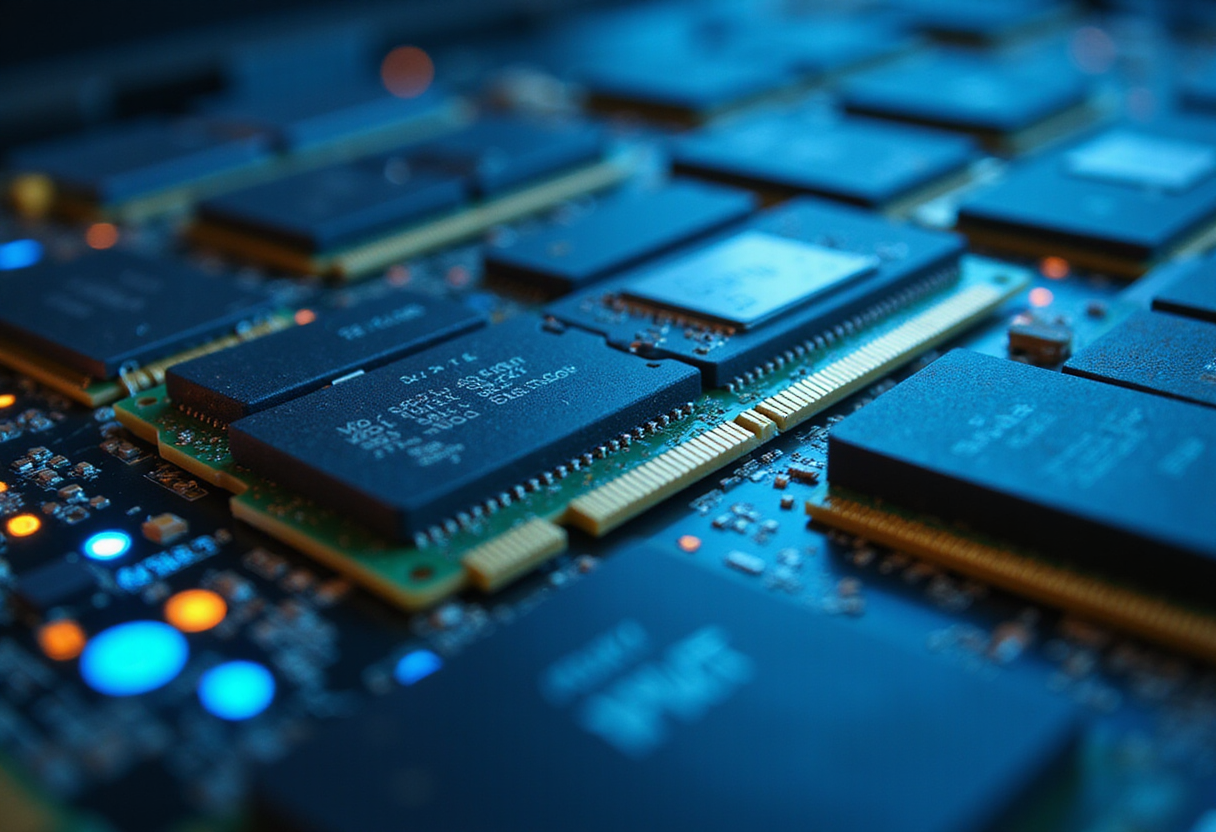
CXMT Corporation has announced that its fifth-generation DRAM platform has entered mass production. The company disclosed the production milestone in a statement carried by AD HOC NEWS.
The move marks another step in CXMT's effort to expand its DRAM portfolio and scale output from its fabrication facilities in China. A fifth-generation platform reaching volume manufacturing signals that the design has cleared qualification and that CXMT is now shipping the product in commercial quantities rather than pilot lots.
For customers and market watchers, the announcement matters for several reasons. CXMT has positioned itself as a domestic Chinese alternative in a DRAM market long dominated by Samsung Electronics, SK Hynix and Micron Technology. Each generational transition a memory maker completes broadens the range of products it can offer, from standard DDR modules used in servers and PCs to specialized memory for consumer devices.
Mass production of a new DRAM node also carries implications for supply. When additional capacity from a fifth-generation platform comes online, it can affect pricing dynamics across the memory market, depending on how aggressively the manufacturer ramps output and which product segments it targets first.
The announcement did not include detailed technical specifications, capacity figures, or customer names. CXMT has not yet published a full public breakdown of the platform's density options, data rates, or process-node metrics. Industry analysts typically await those details before assessing how the platform compares against competing DDR5 and LPDDR5X products already in high-volume production elsewhere.
The company's progression to a fifth generation indicates sustained investment in DRAM research and development. Generational transitions in memory manufacturing require advances in cell design, lithography, and fabrication processes. Reaching mass production means CXMT has resolved the yield and reliability hurdles that gate volume manufacturing of a new node.
Market participants will now watch three indicators: reported wafer output from the new platform, the mix of products based on it, and any design wins with module makers or original equipment manufacturers. Those factors will determine whether the announcement translates into measurable share shifts in the global DRAM market.
Die Signal will continue to track CXMT's production ramp and any follow-on technical disclosures from the company.
via Google News: DRAM chip (Source)
More from Marcus Bennett
Show full bio
News editor covering regulation, policy and their impact on hardware layer of artificial intelligence at Die Signal.
315 articles
Same lot · LOT-C1BA
- DSG-71117nmCXMT Confirms Fifth-Generation DRAM Platform in Mass Production
- DSG-622514nmCXMT Puts New Memory-Chip Platform Into Mass Production
- DSG-49747nmCXMT moves new memory-chip platform into mass production
- DSG-752245nmCXMT Pushes China's DRAM Into Fifth-Generation Technology
- DSG-62293nmCXMT begins mass production of new memory-chip platform