Test report DSG-3343 · Rev F · tested October 13, 2026
Edge AI SiliconDevice under test
AMD Queues More AIE4 NPU Code for Linux 7.2 AMDXDNA Driver
AMD's AIE4 NPU enablement for the AMDXDNA driver keeps landing ahead of Linux 7.2, adding partitioning, doorbells and SR-IOV — but AMD still will not say which product ships it.
- Read
- 2 min
- Words
- 449
- Node
- 45nm
- Operator
- Priya Raman
Spec summary
- AIE4 NPU patches have flowed from AMD engineers since March 2026.
- Initial AIE4 support queued in DRM-Next at the end of April for Linux 7.2.
- This week's drm-misc-next pull adds device partitioning, doorbell/wait support, buffer init and SR-IOV VF bits.
- The Linux 7.2 merge window opens next month.
- AMD has not confirmed which Ryzen AI product — possibly Zen 6 Medusa Point — will carry AIE4.
By Priya Raman
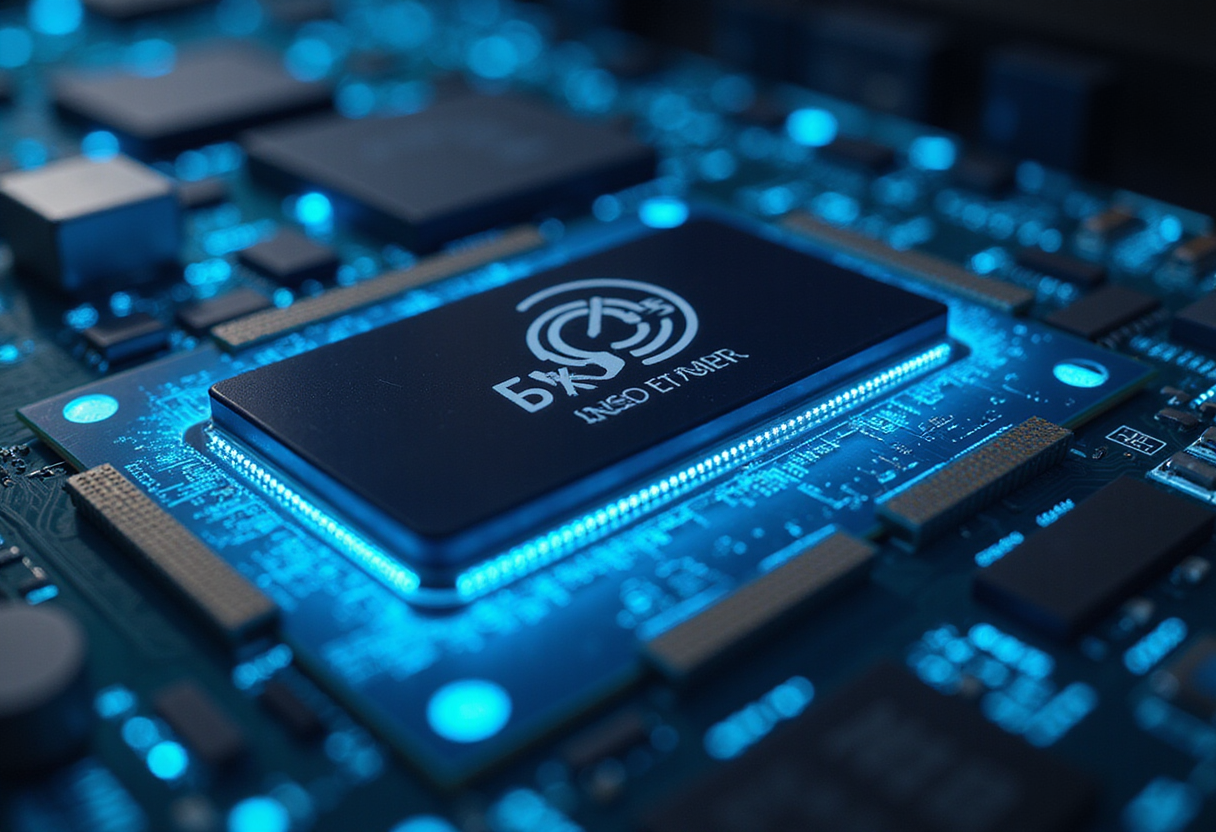
A drm-misc-next pull request submitted this week carries another block of AMD AIE4 NPU enablement code into DRM-Next, targeting the Linux 7.2 merge window that opens next month. AMD software engineers have shipped these patches steadily since March.
The AIE4 platform is AMD's next-generation neural processing unit (NPU, a dedicated accelerator for AI inference workloads). It runs under the AMDXDNA driver, the in-kernel accelerator subsystem that manages AMD's NPU hardware.
Initial AIE4 support began queuing in DRM-Next at the end of April. This week's pull extends it.
What does the new code actually add?
The pull request contains further driver implementation work:
- device partitioning support
- command doorbell and wait handling (the signaling mechanism the host uses to submit and track NPU work)
- buffer initialization
- SR-IOV Virtual Function (VF) bits, the virtualization hooks that let a single physical NPU serve multiple guests
The SR-IOV material matters. Its appearance in the pull suggests AMD intends the next-gen NPU to be virtualizable, matching earlier SR-IOV enablement work on existing Ryzen AI hardware.
Which products will use AIE4?
That is the question AMD has not answered. Nobody outside the company knows when AIE4 silicon will premiere in Ryzen AI products.
The timing invites speculation. Enablement landing now would fit the Ryzen AI Zen 6 "Medusa Point" platform schedule. There is no official confirmation of that pairing at this time.
Readers should treat any Medusa Point claim as inference, not roadmap.
Why the early arrival matters
AMD does not want a repeat of the last launch. The original AMDXDNA driver arrived late, well after the first AMD NPUs shipped in laptops. Kernel-side support now preceding hardware is the correction.
Early enablement gives distribution maintainers time to stabilize the code. It also means day-one functionality becomes plausible rather than probable-missed. The caveat: queuing in drm-misc-next is not shipping. Code must still pass the Linux 7.2 merge window and review before it reaches users.
What else rides along in the pull?
The same drm-misc-next batch includes unrelated changes:
- deferred mapping support in the VirtIO driver
- support for additional eDP panels (embedded DisplayPort, the laptop-panel interface)
- RCade Display Adapter support in the GUD driver
- various bug fixes
The full pull is available on the kernel mailing list for inspection.
For Linux 7.2, the practical takeaway is narrow but real: AMD's next NPU is on track for mainline support before the hardware it drives reaches the market — provided the merge window cooperates and provided AMD ships AIE4 on the schedule the code implies rather than the one it does not.
via phoronix.com (Original)
More from Priya Raman
Show full bio
Correspondent covering money, funding and market shifts around hardware layer of artificial intelligence at Die Signal.
303 articles
Same lot · LOT-C1C9
- DSG-506165nmAMD Submits Linux Kernel Patches for Next-Gen AIE4 NPU
- DSG-489728nmAMD Ryzen AI NPUs Reach Practical Linux LLM Use: Phoronix
- DSG-792410nmAMD Targets 2027 for Major AI Chip Supply Ramp, CEO Says
- DSG-188665nmAMD CEO Lisa Su: AI chip demand stays robust as production expansion accelerates
- DSG-45935nmAMD Plans Substantial Chip Supply Increase for 2027